

Park · Edinburgh · ⭐ 9.3/10 · 2080 reviews · updated: 2026-08-04 20:19:50
Address: Via Town Gate, Dalkeith EH22 2NA, United Kingdom
Dalkeith Country Park — a ducal estate with thousand-year-old oaks
Ten minutes beyond Edinburgh’s southern edge, the ground drops into a wooded bowl where two rivers meet, and a thousand-acre private estate quietly opens its gates to the public. Dalkeith Country Park has belonged to the Buccleuch family since 1642, and it still looks like what it is: a designed aristocratic landscape of parkland, avenues, a Robert Adam bridge and an early classical palace, wrapped around a fragment of genuinely ancient oak wood in which some trees have been standing for more than nine hundred years. What makes it work as a day out is the collision between that inheritance and what has been done with it since 2016 — an adventure fort for children, a converted Georgian stableyard full of food and retail, and miles of waymarked trails through woodland that has never been cleared.
Highlights
- The Old Oak Wood — a Site of Special Scientific Interest and one of the most important stands of ancient oak in eastern Scotland, with individual trees exceeding nine hundred years of age; their hollow trunks and decaying limbs support rare invertebrates, fungi and bats found almost nowhere else nearby.
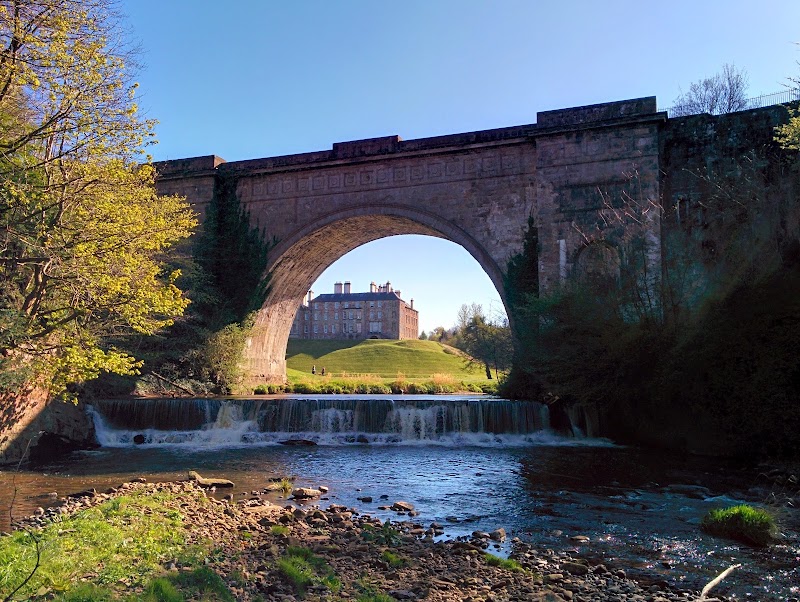
- Montagu Bridge — a single graceful span designed by Robert Adam and dating from 1792, one of the last works of Scotland’s greatest neoclassical architect and still the estate’s most photographed structure.
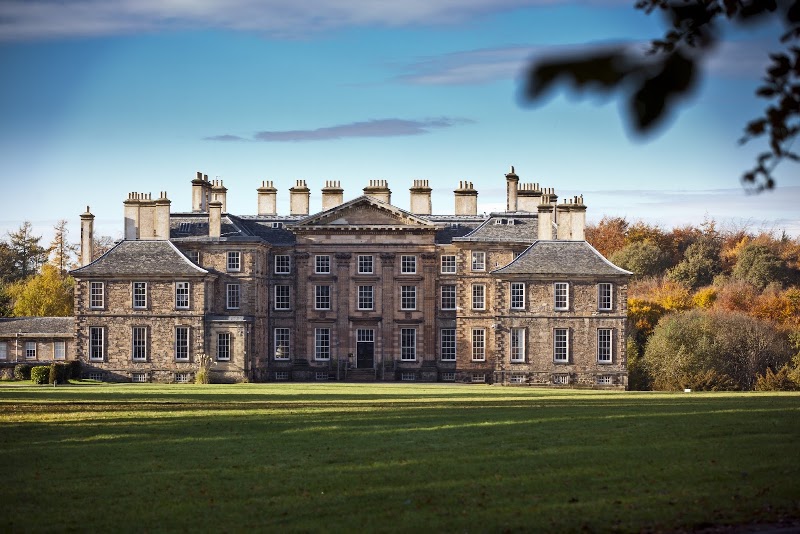
- Dalkeith Palace — begun in 1702 and completed in 1711 for Anna, 1st Duchess of Buccleuch, to designs by James Smith and modelled on the Dutch royal palace of Het Loo; it is regarded as one of the grandest early classical houses in Scotland and was the seat of the Dukes of Buccleuch from 1642 until 1914.
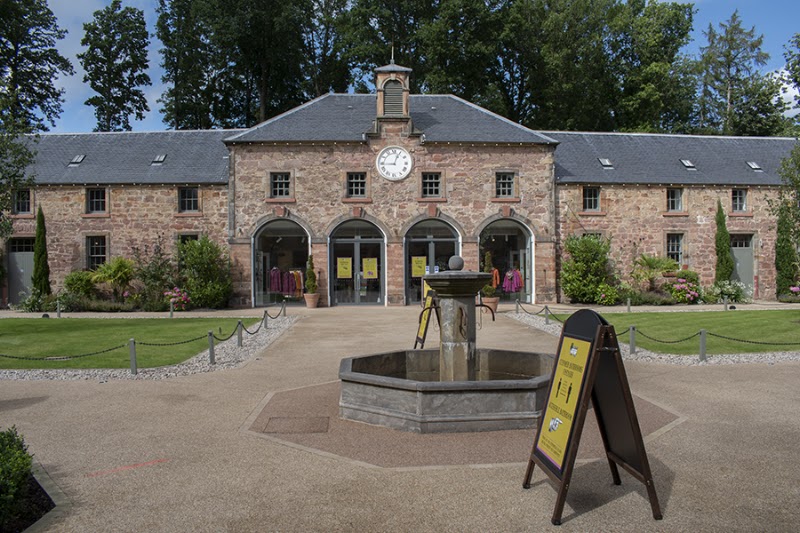
- Restoration Yard — the William Adam stable block of the 1740s, converted in a redevelopment that opened on 25 July 2016 into a store, kitchen, coffee bar and wellbeing space, and now the practical hub of any visit.
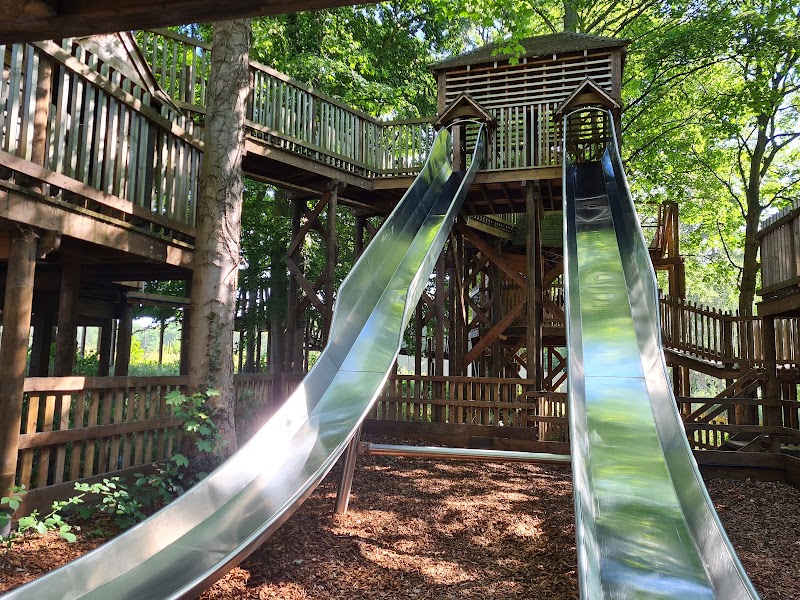
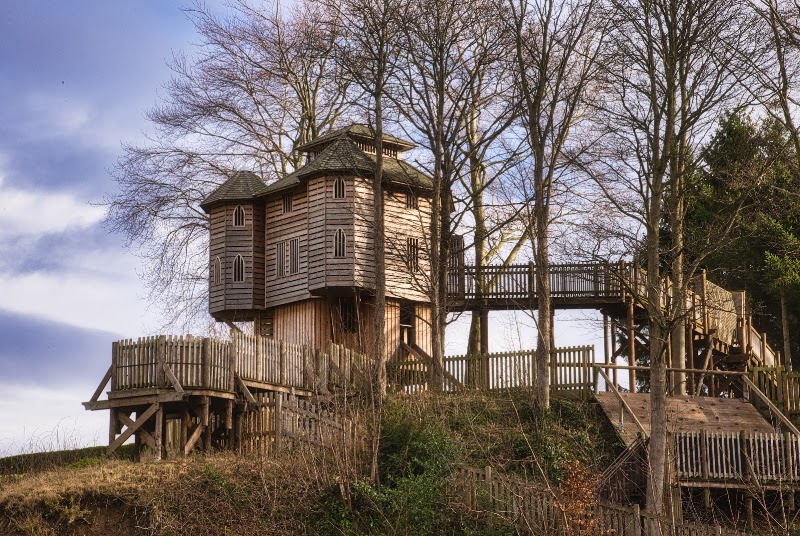
- Fort Douglas — a large timber adventure playground of towers, bridges, slides and climbing structures built into the woodland, designed as the centrepiece of the same 2016 project and the main reason many Edinburgh families come at all.
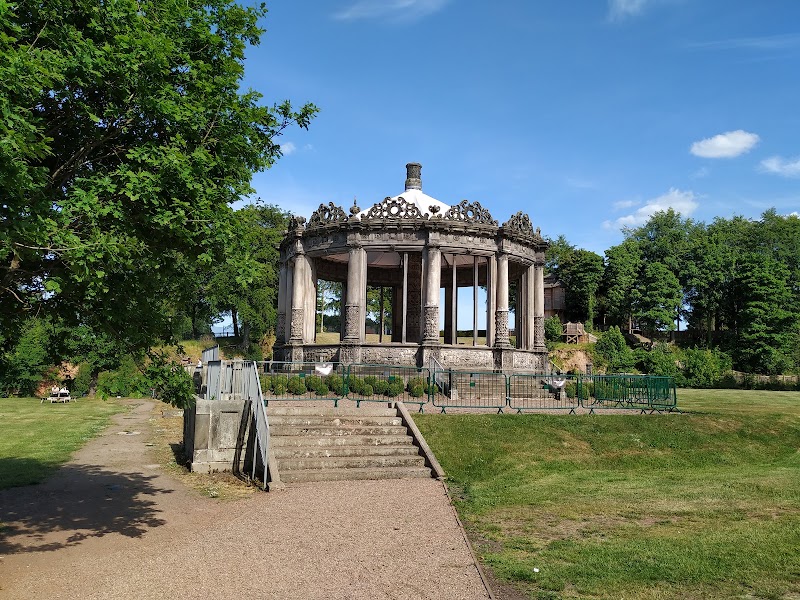
- The Orangery — a striking twelve-sided garden building with Doric columns, designed by William Burn in 1832 for the 5th Duke of Buccleuch and one of several estate curiosities scattered through the grounds.
What you’ll find
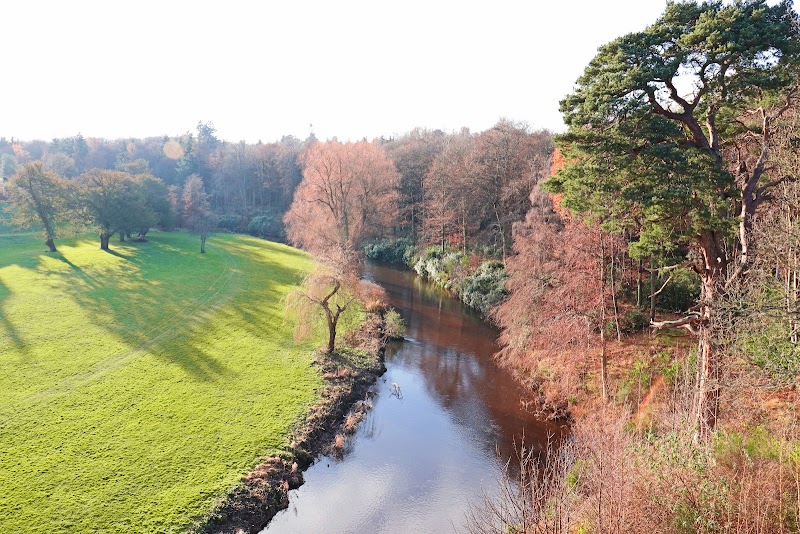
The park is a working private estate that welcomes visitors rather than a municipal park, and the difference shows in the scale of the landscape: broad parkland, mature avenues, deep river gorges and woodland that has never been felled. Two rivers — the North Esk and the South Esk — run through the grounds and join to form the Esk, and much of the walking follows their banks.
- Several miles of waymarked trails of varying length and surface, from firm accessible paths near the yard to rougher woodland and riverside routes.
- The ancient woodland itself, protected as an SSSI, where standing deadwood is deliberately left in place because it is the habitat that matters.
- Restoration Yard in the converted eighteenth-century stableyard, with a store, a kitchen serving lunch, a coffee bar and a wellbeing space.
- Fort Douglas, a substantial adventure playground for children, ticketed separately from general park entry.
- High-ropes courses run within the estate, including a set of ziplines crossing the river — a genuinely spectacular way to see the woodland canopy.
- Estate buildings that reward a slow walk: the palace exterior, the bridge, the orangery, an ice house, the gates and St Mary’s Episcopal Church near the town entrance.
Things to do — and who it’s for
- Families with children — Fort Douglas is one of the largest adventure playgrounds in the Edinburgh area, and the combination of playground, café and easy trails makes this a straightforward whole-day outing.
- Dog walkers — miles of woodland and riverside paths well away from traffic, which is why the estate is a regular fixture in the routine of half of Midlothian.
- Walkers and nature watchers — the ancient oaks, the river gorges and the parkland give a completely different landscape from the hills and the coast, with woodpeckers, owls, bats and abundant fungi in autumn.
- Architecture and history visitors — an Adam bridge, an Adam stable block, a James Smith palace and a Burn orangery in a single afternoon, all in their original designed setting.
- Cyclists — the estate connects to the wider path network, with one of the gates sitting close to a national cycle route, and the internal drives are broad and gentle.
- Anyone who wants countryside without a long journey — this is deep-country landscape reached from central Edinburgh in well under an hour by bus.
Getting there & practical
The estate lies on the edge of the town of Dalkeith in Midlothian, south-east of Edinburgh and only a few minutes from the city bypass. Lothian service 3 runs from the city centre to the middle of Dalkeith, from which the town entrance is a walk of five to ten minutes. By rail, Eskbank station on the Borders line is about twenty-five minutes’ walk away, with a local bus link for those who would rather not walk it; one of the estate gates sits close to a national cycle route, which makes arriving by bike genuinely practical. There is no charge to walk in the park itself; a parking charge applies on arrival for those who drive, payable by card or cash, and Fort Douglas is ticketed separately with advance booking available. The gates are open from early morning until early evening, while the playground, store and kitchen keep shorter daytime hours, so an afternoon arrival can mean the park is open but the facilities are closing. Allow two hours for a walk and a coffee, and most of a day if children are heading for the fort.
When to visit
Spring is the best-kept secret here: bluebells and wild garlic under the old oaks, the trees still bare enough to show the shape of the parkland, and the river running high and loud. Summer is peak family season, with the playground and the high-ropes courses busy and the woodland canopy providing shade on the hottest days — a real advantage over Edinburgh’s open hilltop parks in August, when the city itself is submerged by the Festival and the Fringe and the estate feels like an escape. Autumn is the connoisseur’s choice and arguably the finest season of all: the ancient oaks turn, the fungi appear in extraordinary variety on the deadwood, the river gorges fill with colour, and the light through the veteran trees is remarkable. Winter strips the woodland back to structure, which is exactly when the estate’s architecture reads best — the bridge, the palace front and the orangery are far easier to appreciate without leaves, and the paths are quiet apart from a scattering of dog walkers. Note that the shorter winter days close in against the early evening gate time, so plan an earlier start.
Good to know
The site has been occupied for a very long time — the estate traces activity back to Roman times, and a castle stood here from the 1100s, when the lands belonged to the Graham family, Lords of Dalkeith. It later became the stronghold of the Earls of Morton, and in 1642 it was bought by Francis Scott, 2nd Earl of Buccleuch, beginning an ownership by the Buccleuch family that has now lasted well over three centuries. The medieval castle became a palace between 1702 and 1711, when Anna, 1st Duchess of Buccleuch, commissioned James Smith to remodel it wholesale on the model of Het Loo, the Dutch palace of William of Orange, using the finest European marble and oak. Successive generations added to the setting rather than the house: William Adam built the stable block in the 1740s, his son Robert Adam designed the Montagu Bridge in 1792, and William Burn built the twelve-sided orangery for the 5th Duke in 1832. The palace has hosted its share of history — King George IV stayed here during his celebrated visit to Scotland in 1822, Queen Victoria visited in 1842, and Polish troops were quartered in the building during the Second World War. The Dukes of Buccleuch used it as their seat until 1914, after which it served a series of other purposes. The modern chapter began in 2015, when construction started on a major redevelopment devised in partnership with the designer Amanda Pratt; Fort Douglas and Restoration Yard opened on 25 July 2016, along with new paths and waymarked trails, and the project created more than fifty jobs. Underneath all of it sits the oldest thing on the estate: the ancient oak wood, now designated a Site of Special Scientific Interest, in which some individual trees have been growing since before the palace, the bridge and the dukedom existed.
Visitor tips
- Check the facility hours, not just the gate hours. The park opens early and closes in the early evening, but the playground, store and kitchen run shorter daytime hours and stop well before the gates do.
- Book Fort Douglas tickets in advance in school holidays and at summer weekends — it is the single biggest draw on the estate and capacity is limited.
- Take the river paths rather than the main drives if you want the ancient trees and the quiet; the veteran oaks are the reason this place is nationally important, and most visitors never leave the area around the yard.
Questions & answers
Is it free to visit? Walking in the park itself is free. A parking charge applies to anyone arriving by car, payable on arrival by card or cash, and Fort Douglas adventure playground is ticketed separately. Arriving by bus therefore removes the main cost entirely.
What are the opening hours? The estate gates are generally open from early morning until early evening, while the playground, store and kitchen operate shorter daytime hours. Times vary seasonally, so check before travelling if you are arriving late in the day.
Can I go inside Dalkeith Palace? The palace is not generally open as a visitor attraction; it is admired from the outside as part of the designed landscape. The public offer is the park, the trails, the playground and Restoration Yard in the former stableyard.
How old are the oaks? Some exceed nine hundred years. The ancient wood is a Site of Special Scientific Interest, and the value lies as much in the decaying and hollow wood as in the living trees, because that deadwood supports rare invertebrates, fungi and roosting bats.
Can I get there by public transport? Yes. Lothian service 3 runs from central Edinburgh to the middle of Dalkeith, leaving a walk of five to ten minutes to the town entrance. Eskbank station on the Borders line is around twenty-five minutes away on foot, with a local bus link available.
Are dogs welcome? The estate is one of the most popular dog-walking destinations in Midlothian, with miles of traffic-free woodland and riverside paths. Dogs should be kept under close control around the playground, the yard and any livestock, and cleaned up after everywhere.
Is it suitable for buggies and wheelchairs? Partly. The paths around Restoration Yard and the main drives are firm and manageable, while the woodland and riverside trails are rougher, with roots, mud and gradients. The estate publishes an accessibility guide describing the terrain route by route.
What is there for children beyond the playground? High-ropes courses run within the estate, including ziplines that cross the river, and the woodland trails themselves are an easy adventure — hollow trees, riverbanks, bridges and open parkland to run in. Between the fort, the ropes and the trails, a full day is easy to fill.
Photos
Show 1 more photos
Visitor reviews
Reviews last updated: 2026-08-04 20:19:50
Data is refreshed monthly. Sources: edinburghname.com and editorial picks based on reviews.
A very accessible country park near Edinburgh with huge car parks. Regular large-scale events. Great for families, friends and dogs, with wide open spaces and wonderful views. There are also shops and a good café.
Such a wonderful park. Paid £6 for the car park and spent the day there. There's a restaurant, a café, a shop and loads of walking trails. I really enjoyed spending time here, it's a great way to spend a sunny day. Rainy…
We visited an event for children. They had a wonderful time on the UK's largest inflatable obstacle course. Then they went up to the big playground, which is always popular. A huge area for walking the dog and a very nic…
The park and the attractions are wonderful. I expected a bit more from the recently refurbished café, which is lovely. I just feel the menu lacked imagination, and the coffee blend could be improved. Perhaps it wasn't gi…
We've just visited Fort Douglas (and the café/shop). I paid about £35 for entry and was very disappointed with what we got for it! Unfortunately, the website definitely oversells the playground – I would NEVER have paid…