

Park · Edinburgh · ⭐ 9.5/10 · 7549 reviews · updated: 2026-08-04 20:19:49
Address: Melville Dr, Edinburgh EH9 1ND, United Kingdom
The Meadows — the common that belongs to the city itself
The Meadows is not a designed park so much as a survival. Sixty-three acres of flat green grass south of the Old Town, it was once a loch, then a drained marsh, then the town’s grazing and drying ground, and it has stayed open because generations of Edinburgh citizens refused to let anyone build on it. Legally it is common good land, held for the community itself and merely managed by the council. Practically it is the great democratic lawn of the city: students from the university on one edge, families from the tenements on the other, cricket in one corner, a barbecue in another, and long avenues of trees running dead straight across the middle. In cherry blossom week in April it is one of the most beautiful places in Scotland, and it costs nothing to walk into.
Highlights
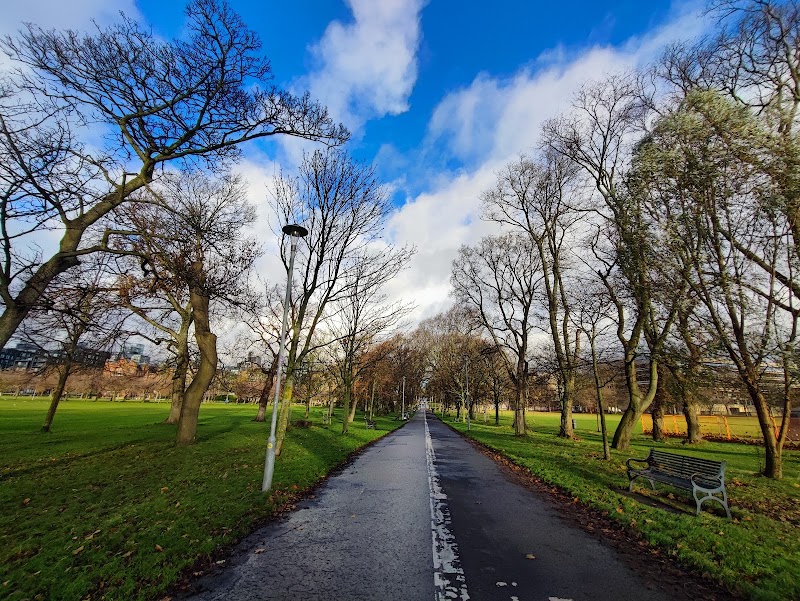
- Middle Meadow Walk — the broad tree-lined promenade that cuts the park from north to south, descending from the university quarter and functioning as one of the busiest walking and cycling arteries in the city; its line dates back to the eighteenth-century improvements.
- The cherry blossom avenues — hundreds of ornamental cherries that flower in a compressed and spectacular week in mid to late April, drawing picnickers, photographers and hanami parties from across the city.
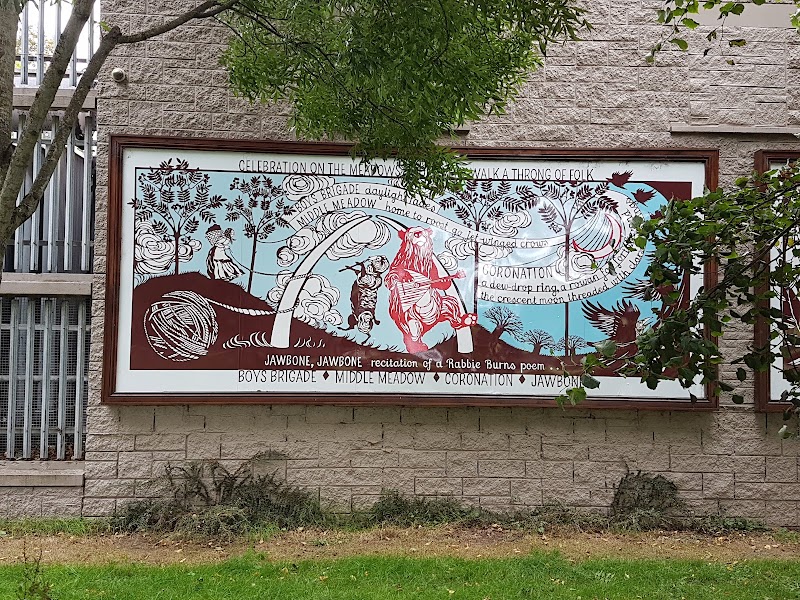
- Jawbone Walk — named for the arch of four whale jawbones that stood at its entrance for well over a century. They came from the Zetland and Fair Isle knitters’ stand at the 1886 International Exhibition and were gifted to Edinburgh by the people of Shetland the following year; the arch was taken down in July 2014 for conservation and has been judged too fragile to reinstate, with a bronze replica cast from 3D scans proposed in its place.
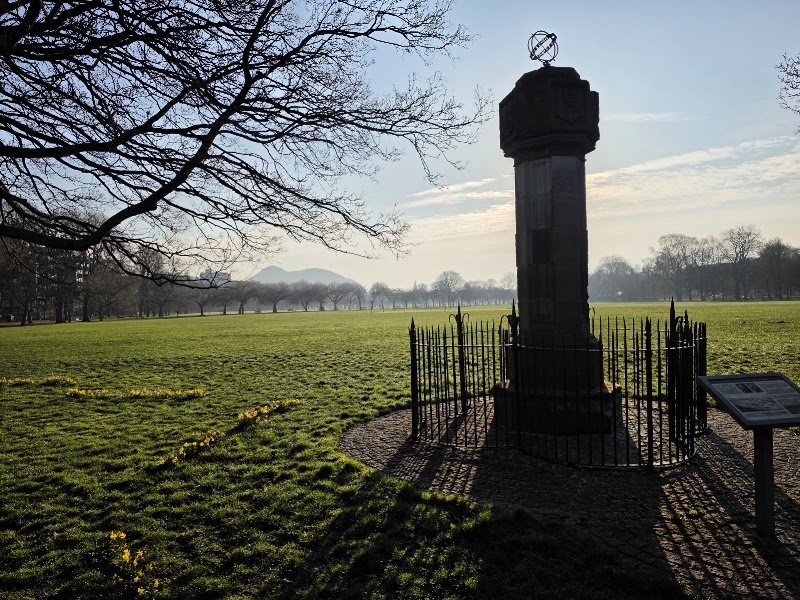
- The Prince Albert Sundial — a surviving relic of that same 1886 International Exhibition of Industry, Science and Art, whose vast temporary glass pavilion once covered a large part of this grass.
- Bruntsfield Links — the adjoining stretch of common where golf has been documented since 1695, and where the 36-hole Short Hole Course laid out in 1890 is the oldest of its kind in the world, free to play, with holes of 45 to 90 yards over natural humps and hollows.
- The sports ground — a dense concentration of tennis courts, croquet lawns, cricket squares and football and rugby pitches that fills every dry evening from March onwards.
What you’ll find
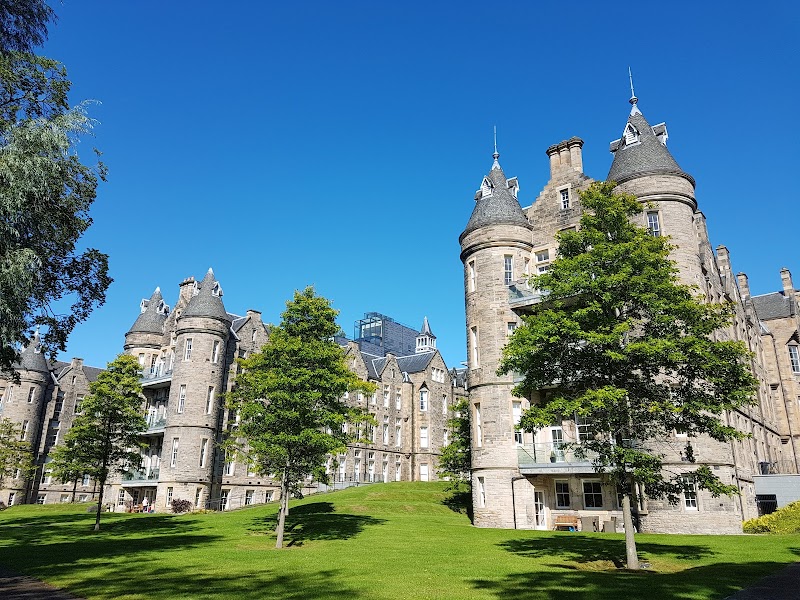
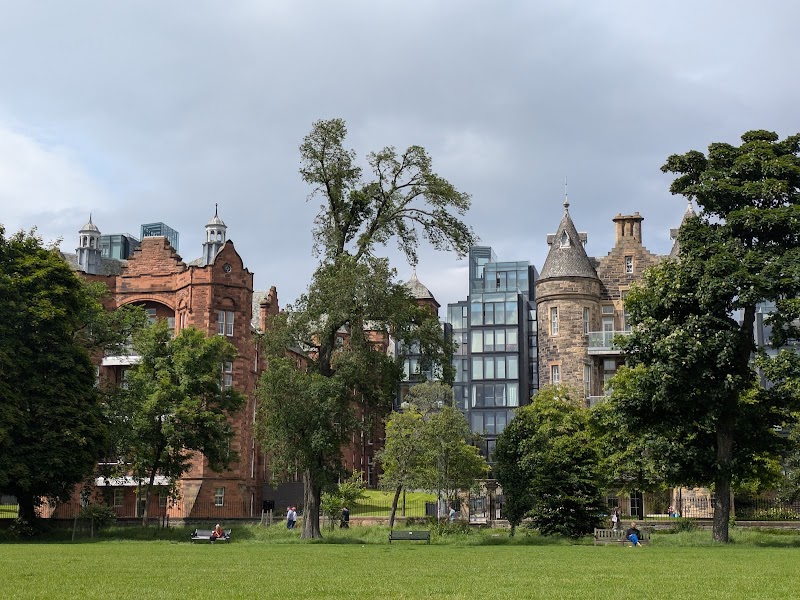
The Meadows is deliberately plain: no lakes, no follies, no ornamental bedding to speak of. What it has is space, avenues and light, framed on the north by the university and the Quartermile development on the site of the old Royal Infirmary, and on the south by the tenement terraces of Marchmont and Sciennes.
- Long straight tree-lined walks, several of them lime avenues descended from the eighteenth-century planting, meeting at right angles across the open grass.
- Wide unfenced lawns used for everything from frisbee and slacklines to open-air lectures, protests and the overflow of half the city’s summer parties.
- Tennis courts, a croquet club, cricket and football pitches, and a children’s playground, with the Pavilion café at the sports end.
- Bruntsfield Links at the western end — humpy, ancient golfing ground with a free short-hole course and, at its edge, buildings claimed as the oldest golf clubhouse sites in the world.
- Remnants of the 1886 Exhibition, including the Prince Albert Sundial and the memorial pillars that were later dispersed around the city.
- Wide flat paths that make it one of the easiest large green spaces in Edinburgh for wheelchairs, buggies and anyone who does not want a hill.
Things to do — and who it’s for
- Students and young residents — the default meeting place, revision spot and evening venue of the university quarter, five minutes from the lecture theatres.
- Families — flat, open and safe, with a playground, ice cream in summer and no cliffs, roads or water to worry about.
- Runners and cyclists — a genuine off-road commuting and training network with straight, well-surfaced avenues, popular enough that the March charity marathon runs laps here.
- Golfers — the free short-hole course on Bruntsfield Links is a piece of living golf history that most visitors to Scotland never hear about, and it takes about an hour.
- Blossom watchers and photographers — in the third and fourth weeks of April the cherry avenues turn the park pink, and hanami-style picnics take over the grass.
- Anyone wanting the local Edinburgh rather than the postcard one — this is the park the city actually uses, on an ordinary Tuesday, in ordinary clothes.
Getting there & practical
The Meadows lies immediately south of the Old Town, wedged between the university’s George Square campus and the tenement districts of Marchmont, Sciennes and Bruntsfield. It is about twenty minutes’ walk from Waverley station and a similar distance from Haymarket, and the walk in from the north through the university quarter is the classic approach. Lothian service 47 runs through the park along Middle Meadow Walk, which is unusual and very convenient; a considerable number of other Lothian services run along the northern and southern edges, serving Marchmont, Bruntsfield and the Royal Infirmary corridor. Entry is free and the park never closes — there are no gates, and the main avenues are lit at night. There are public toilets and a café at the sports end, and the pitches and courts operate on a booking system in season. Allow half an hour to cross it, an hour to walk the perimeter properly, and a whole afternoon if you have brought a rug and the weather is behaving.
When to visit
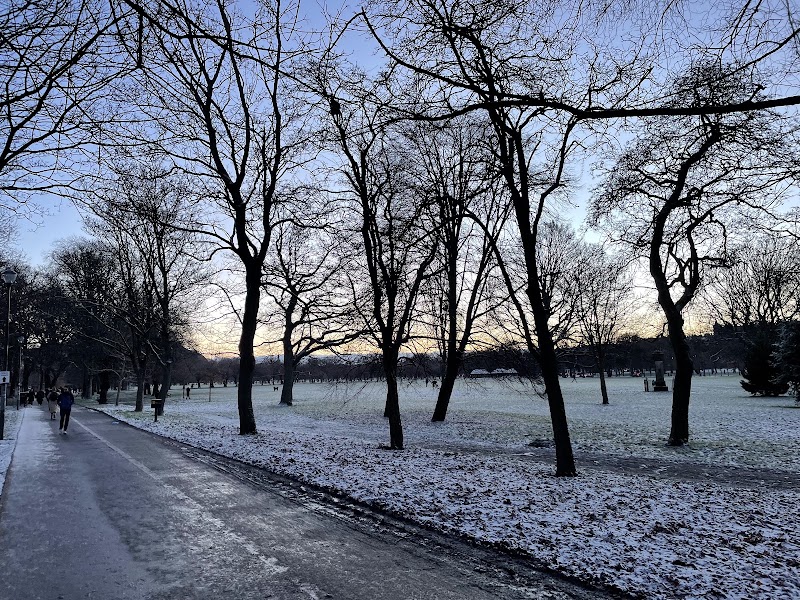
April is the headline month: the cherry avenues flower in a tight window in the third and fourth weeks and the whole park is briefly transformed, with picnic blankets under the blossom on any dry day. Summer is when the Meadows does its real job — barbecues, frisbee, cricket, festivals, the first weekend of June traditionally given over to the Meadows Festival, and in August the overspill of the Festival and Fringe, when performers flyer on the paths and audiences sprawl on the grass between shows. Autumn turns the lime avenues gold and gives the park its finest light, long shadows across the flat grass in the late afternoon, and it is the best season for running here. Winter strips it back to bare geometry: black trees, straight paths, low light and a park mostly given over to dog walkers, hardy footballers and students taking the shortest route home. Snow is infrequent in Edinburgh, but when it falls the flat expanse fills with sledgers heading for the small slopes at the Bruntsfield end and the view towards the Old Town skyline is unforgettable.
Good to know
This ground was water long before it was grass. The Burgh Loch, also called the South Loch, filled the hollow here and served as a water supply for the medieval town; it was partly drained in the mid-seventeenth century and for a while carried the name Straiton’s Loch. The decisive intervention came in 1722, when Sir Thomas Hope of Rankeillor, 8th Baronet, undertook large-scale drainage and turned the marsh into a designed landscape with a perimeter path, hedges, avenues of lime trees, drainage canals and a summer house. Maps thereafter labelled it “The Meadows or Hope Park”, and the walks you use today follow that layout. An Act of Parliament in 1827 protected the ground from development, and the park remains common good land, technically in the ownership of the community. Its history since is a catalogue of civic uses. In 1886 the International Exhibition of Industry, Science and Art covered a large part of it with a temporary glass pavilion; the Prince Albert Sundial and the whale jawbones from the Zetland and Fair Isle knitters’ display are what remains, and the jawbones were formally gifted by the people of Shetland the year after the exhibition closed. Football took root here in the 1870s, and the first Edinburgh derby between Hearts and Hibernian was played on this ground on 25 December 1875. During the Second World War more than five hundred allotments were dug across the park as part of the Dig for Victory campaign, and some survived into the 1960s. Adjacent Bruntsfield Links carries an even older story: golf is documented there from 1695, a building called Golfhall of 1717 has been claimed as the world’s first golf clubhouse, the Golf Tavern has served as a clubhouse since 1788, and both the Royal Burgess Golfing Society of 1735 and the Bruntsfield Links Golfing Society of 1761 began on this turf before moving to larger courses.
Visitor tips
- For the cherry blossom, aim for the third or fourth week of April and go early in the morning — by midday in blossom week the avenues are shoulder to shoulder and every good picnic spot is taken.
- Middle Meadow Walk is a serious cycling and bus route as well as a promenade; keep to the walking side, and take particular care with children and dogs at the crossings.
- The whalebone arch is not currently standing. Jawbone Walk keeps the name, but the original bones were removed in 2014 and were found too fragile to return, so do not go looking for the arch itself.
Questions & answers
Is there an entrance fee or closing time? No. The Meadows is a free, open, unfenced public park with no gates and no closing hours, and the main avenues are lit after dark.
Where is the famous whalebone arch? Not in place. The four whale jawbones that gave Jawbone Walk its name were removed in July 2014 for conservation and later judged too fragile to be re-erected outdoors; a bronze replica cast from detailed 3D scans has been proposed to stand in the original spot.
When is the cherry blossom at its best? Typically the second half of April, with the peak usually falling in the third or fourth week. The flowering window is short — often little more than seven to ten days — and a wet, windy spell can end it early.
Can I play golf there? Yes. Bruntsfield Links, on the western edge, holds a free 36-hole short-hole course laid out in 1890 with holes of roughly 45 to 90 yards. It is the oldest short-hole course in the world, needs no booking, and a round takes about an hour.
Was it really a loch? Yes. The Burgh Loch or South Loch occupied this hollow and supplied water to the medieval town. Partial drainage began in the mid-seventeenth century, and Sir Thomas Hope’s works from 1722 turned the remaining marsh into the park.
Who owns The Meadows? It is common good land — historically common ground technically belonging to the community of Edinburgh itself, administered by the council. An Act of Parliament of 1827 shields it from development, which is why sixty-three acres of flat land survive undeveloped this close to the city centre.
Are barbecues and picnics allowed? Picnics are a defining feature of the park in summer. Disposable barbecues are heavily restricted because of scorch damage to the turf and the risk to tree roots, so check the signage on site before lighting anything, and never place anything hot directly on the grass.
Is it suitable for wheelchairs and buggies? Unusually well suited. The park is genuinely flat, the main avenues are wide and hard-surfaced, and there are no steps or steep gradients anywhere in the central area — a real contrast to most of hilly Edinburgh.
Photos
Show 1 more photos
Visitor reviews
Reviews last updated: 2026-08-04 20:19:49
Data is refreshed monthly. Sources: edinburghname.com and editorial picks based on reviews.
A wonderful park. There are lots of lovely dogs around, so it's ideal for walking my dog when I park on Chalmers Street. A great view of Arthur's Seat. 99% of the time it's clean, but people are people.
We were incredibly lucky to visit the Meadows park at the weekend, where the annual Meadows Festival was taking place. What a fantastic atmosphere! The park itself is beautiful with its spacious green spaces and old aven…
One of the best places in Edinburgh! It's a beautiful, spacious park with a calm atmosphere, ideal for walks, relaxing, studying or a picnic with friends. The tree-lined paths are especially lovely, and the park looks wo…
What a true gem of Edinburgh. A stunning and huge expanse of grass lined with trees, on the day of my visit very popular with adults and small children. If you want to practise your tennis, there are also several courts…
A big beautiful park.
A picnic, a game of volleyball, football, frisbee. Whatever your heart desires. ❤️