

The mile-long stretch of fine, flat sand has always played a special role in the history of Portobello. The past of this famous seaside area is filled with fascinating facts and connections to some of history’s most prominent figures. However, not everyone is familiar with this rich heritage. Find out more at edinburghname.
This article will delve into the story of one of the most famous and picturesque beaches in Edinburgh’s coastal suburbs.
Where It All Began
References to the area that would become Portobello Beach can be found in the pages of Scotland’s early history. It was here, in 1745, that Charles Edward Stuart reviewed his army of Highland Jacobites after they had successfully defeated Sir John Cope’s government forces at the Battle of Prestonpans.
A Grand Event
Less than a century later, a different generation of Highlanders would gather on the same sands. This was in 1822, when King George IV arrived in Scotland to attend a grand military spectacle organised by Sir Walter Scott. As Scott had been a member of the Edinburgh Light Dragoons during the Napoleonic Wars, he knew the Portobello beach area well, having often trained there.
This magnificent military display attracted around 50,000 visitors, including Scottish nobility and high-ranking officials.
A Place of Leisure
The presence of horses and military training was a traditional feature of Portobello throughout the 19th and the first half of the 20th century. Among the regular visitors to the beach were the Dragoons and Hussars quartered at the nearby Piershill Barracks. They were often joined by retired army and naval officers, all of whom enjoyed spending their time with recreational horse riding.
However, alongside the training and riding, Portobello gradually began to gain a reputation as a place for relaxation and bathing. From the second half of the 19th century, the beach became a popular spot for the working classes, who would spend their time there relaxing after a long week at work.
A Fully-Fledged Resort
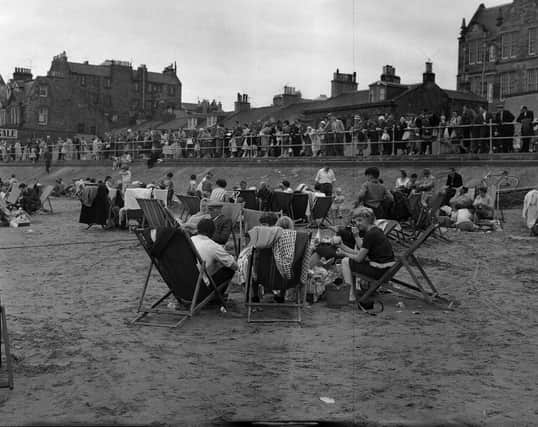
Later, as the railways underwent rapid development and the annual holiday became an integral part of employment for every worker, Portobello transformed into a fully-fledged Scottish resort. Its main attraction, of course, was the beach.
The arrival of countless visitors brought significant income to the local economy. It’s no surprise that the area’s shops, hotels, eateries, and entertainment venues thrived. Interestingly, at that time, the concept of a “deckchair” was not yet common among holidaymakers. This, however, didn’t stop people from fully relaxing, stretched out on the warm sand under the gentle sun. Concert parties, however, were already known as one of the best beach entertainments, and boating was equally popular.
A Changing Tide
For a long time, all went well. Portobello was known to thousands of people who gladly returned each year to relax. However, the second half of the 20th century brought significant change. This was when cheap package holidays to foreign resorts began to appear. Naturally, these became a more appealing option for Portobello’s traditional visitors, and the number of holidaymakers declined considerably. This doesn’t mean the beach became derelict or fell out of use, of course not! It simply wasn’t as crowded as it once was.
A Cultural Renaissance
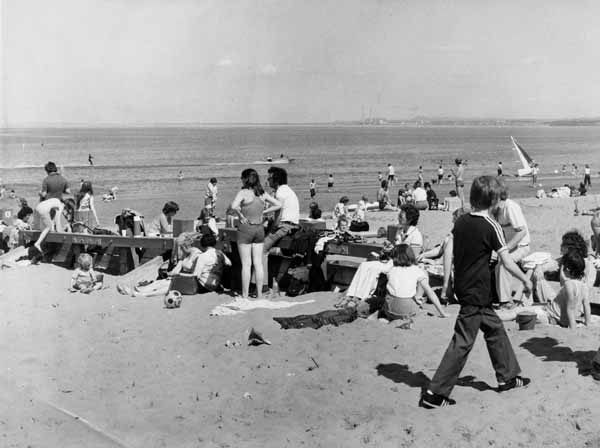
As is sometimes the case, challenging events can lead to something positive. This paradox was true for Portobello. The beach remained a great public asset, and although it became less busy during the summer, local residents decided to give it a “second life” by using it for new purposes.
In 2003, the Big Things on the Beach trust was established. Its goal was to promote Portobello as a place for creating and presenting cutting-edge works of contemporary art. Later, Portobello Open Door was formed, an organisation that promotes and develops culture and the arts in the area by harnessing local talent and initiative to host engaging events on the beach.
Active Recreation
In time, sports were added to the cultural entertainment and events. Kayaking and sailing became very popular in Portobello, leading to the creation of a yacht club. It’s no surprise that these activities attract enthusiasts from all along the Scottish coast. The beach also regularly hosts volleyball competitions, while morning jogs are a common sight at any time of year.
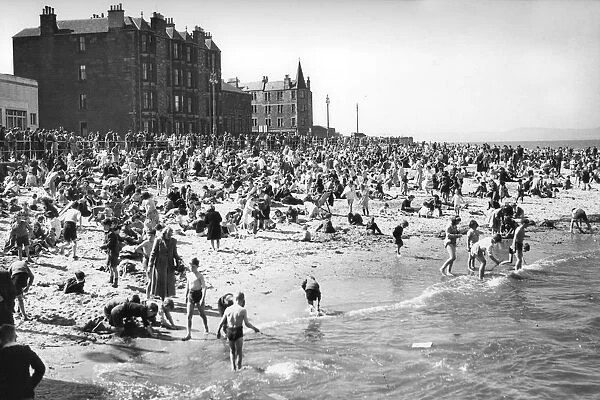
Thus, Portobello can be called a Scottish resort of historical significance. Over its long existence, this place has transformed from a “training arena” into a complete recreational zone. The value of this beach is proven by the love of the local residents, who strive with all their might to preserve and improve it.