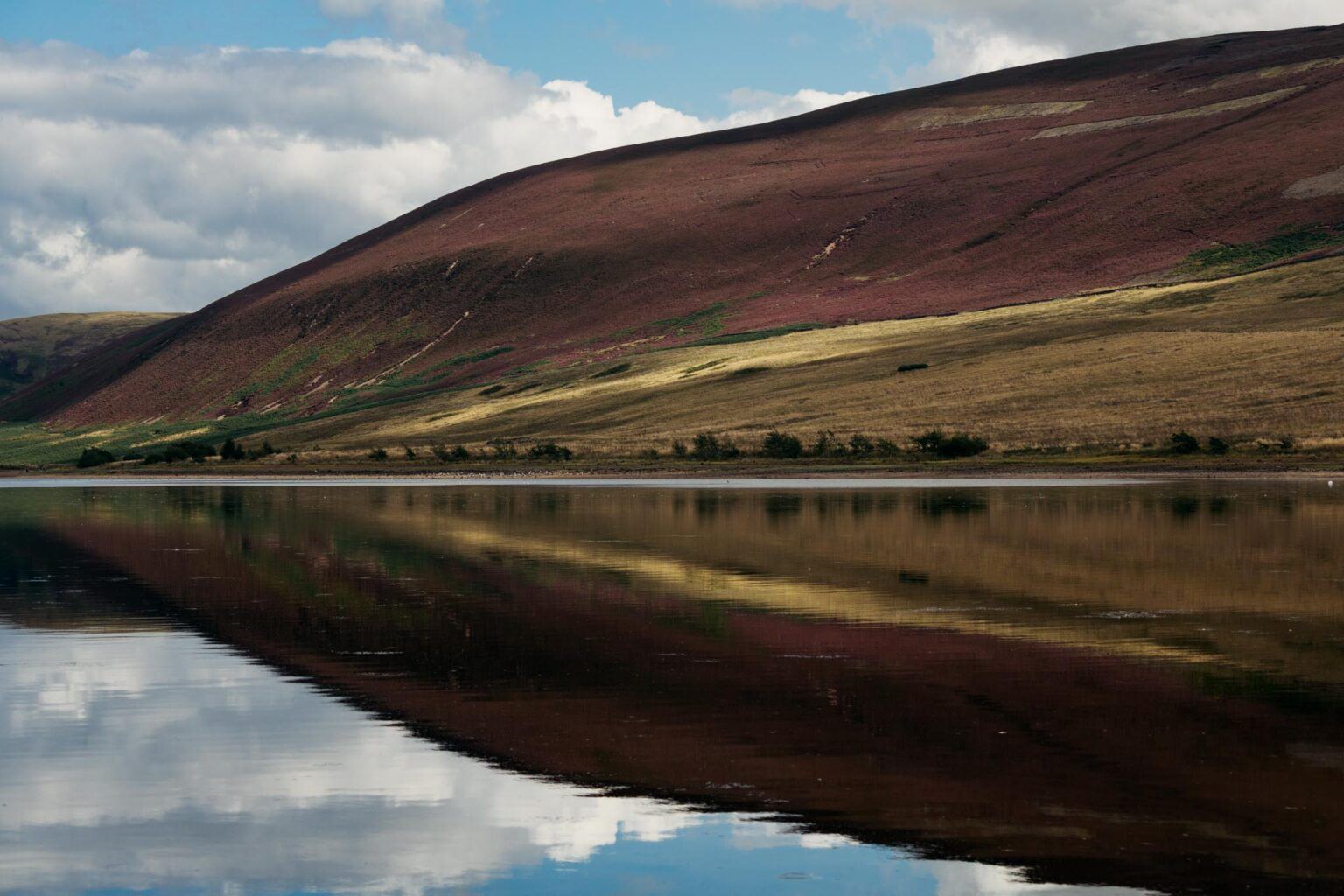
Nestled within the Water of Leith catchment area, Threipmuir Reservoir plays a vital role in regional water management. Once a primary source of drinking water, it has evolved into a crucial flood-defence asset, shielding Edinburgh’s urban sprawl from rising waters. Today, this historic site serves as more than just infrastructure; it is a hub for recreation, ecological research, and a place for locals to reconnect with the natural landscape. Read more on edinburghname.
A Legacy of Engineering in the Pentlands
The construction of Threipmuir Reservoir spanned from 1843 to 1848, led by the Edinburgh Water Company during a pivotal era of urban modernisation. The project was overseen by James Jardine, a distinguished Scottish civil engineer. Jardine implemented a sophisticated system of pipes to collect water from natural mountain springs, funneling it into aqueducts and reservoirs with remarkable efficiency.
Threipmuir was a central piece of a complex network developed across the Pentland Hills. It functioned in tandem with the nearby Harlaw Reservoir, which was completed the same year. Threipmuir discharged its overflow into Harlaw, allowing engineers to regulate the downstream flow of the Water of Leith and maintain a steady supply for the city. The project was a technical triumph; despite the unstable ground and heavy gravel layers characteristic of the Pentlands, Jardine’s expertise ensured the system was seamlessly integrated.
Ownership shifted over the decades as water management evolved. By 1870, the reservoir moved from the Edinburgh Water Company to the Edinburgh Water Trust. Throughout the mid-20th century, administrative control changed several times following various reforms, eventually landing under the oversight of the Lothian Regional Council.
A major turning point occurred in 2006 when ownership transferred from Scottish Water to the City of Edinburgh Council. This marked Threipmuir’s official transition from a utility asset to a tool for environmental and hydrological management. Under the Scottish Government’s Water of Leith Flood Prevention Scheme, launched in 2007, the reservoir’s operational logic was completely overhauled. Now, during periods of heavy rainfall, water levels are intentionally lowered to create a “buffer,” allowing the reservoir to absorb excess runoff and prevent flooding in the city below.
In 2023, Threipmuir became the focus of national conservation efforts following the discovery of Ptychostomum cyclophyllum—an incredibly rare moss known as Round-leaved Bryum. Having been considered extinct in the UK for over thirty years, its rediscovery on the reservoir’s shores was a landmark event for British naturalists. To protect the species, an immediate rescue mission was launched. Led by NatureScot, in collaboration with the Royal Botanic Garden Edinburgh and Scottish Water, experts harvested thousands of healthy shoots from the original thirteen clusters found at Threipmuir. By September 2025, the project reached a successful milestone with the transplantation of the moss to two new secure locations: North Third Reservoir and Loch Coulter near Stirling.
The Modern Significance of Threipmuir
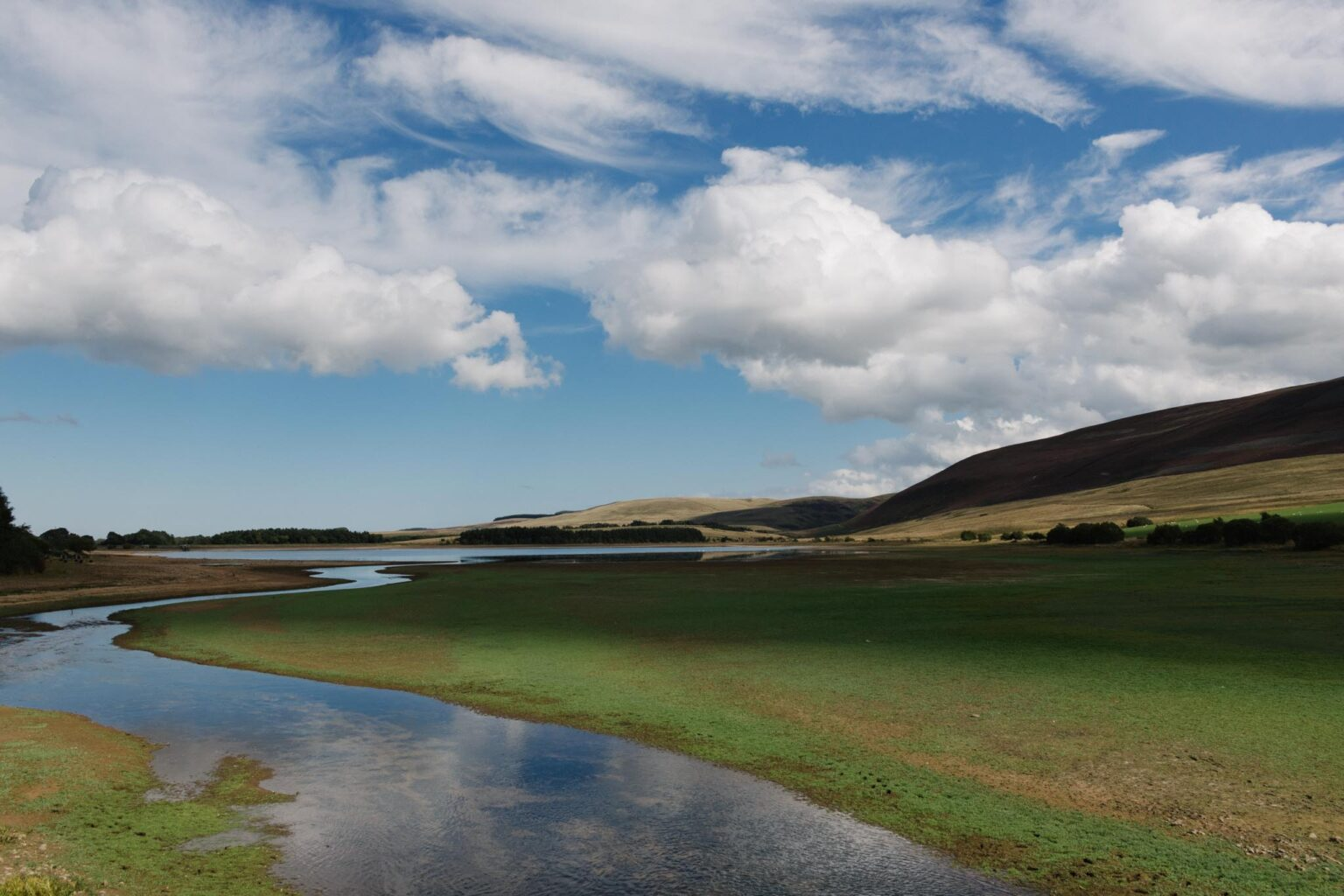
What began as a Victorian engineering solution for a growing city is now a multi-functional cornerstone of the region. Its strategic importance in flood regulation remains essential for protecting Edinburgh’s residential areas and the Port of Leith. Beyond its technical utility, Threipmuir has become a sanctuary for outdoor enthusiasts. Whether it is anglers fishing for stocked brown and rainbow trout, or hikers taking in the panoramic views from the Easter Bavelaw and Redford Bridge dams, the reservoir remains a vital part of Scotland’s heritage and its future.