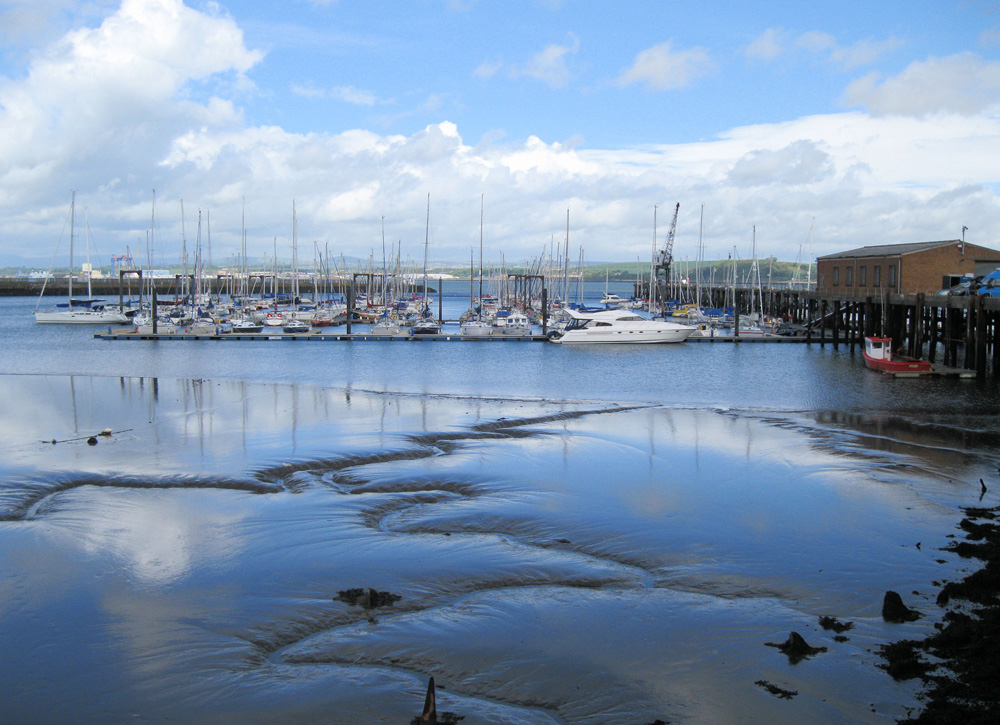
Unlike many traditional harbours, Port Edgar was forged as a specialised hub for naval training and mine warfare. From its days as HMS Columbine to its service as HMS Lochinvar, the base played a pivotal role in defending the North Sea through two World Wars. In the modern era, the site’s strategic geography has been repurposed to drive the development of sailing and maritime tourism. Read more on edinburghname.
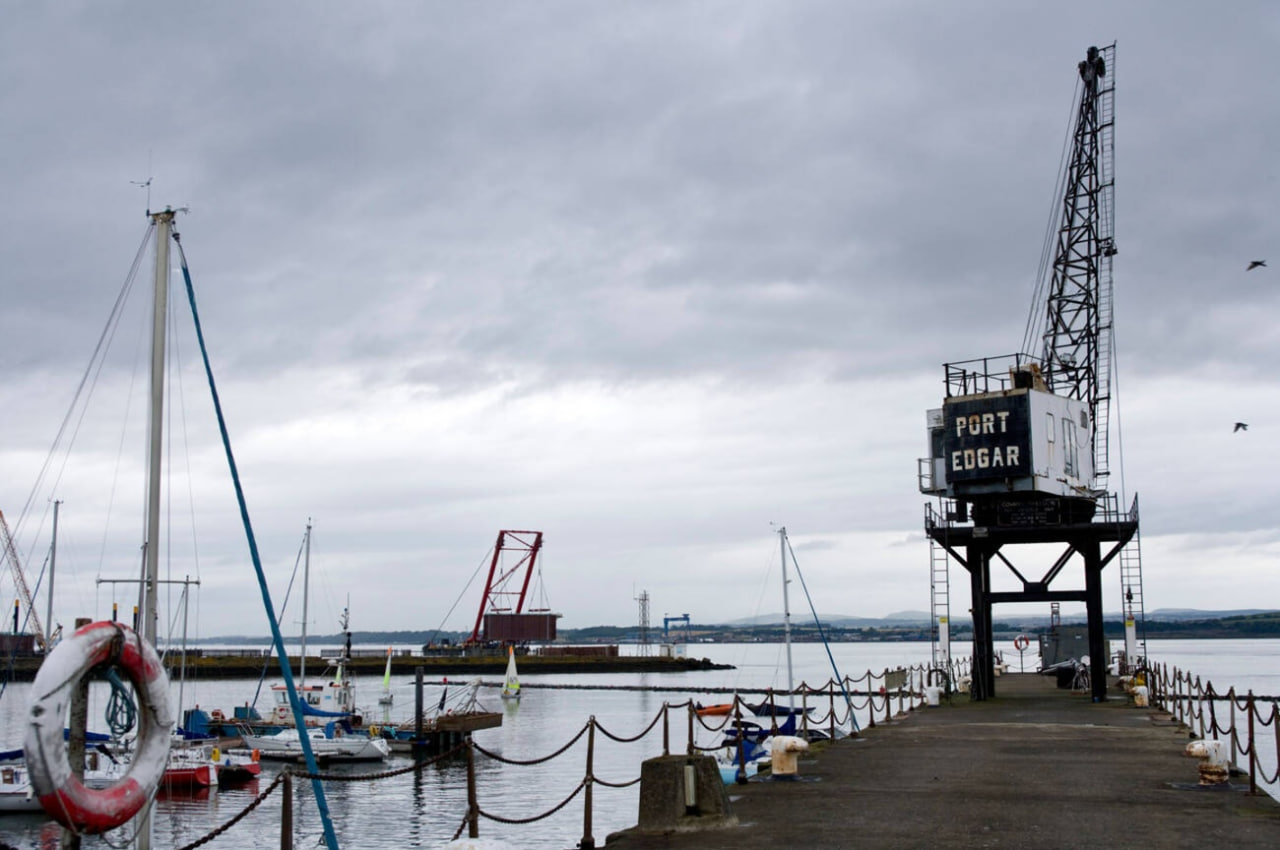
The Evolution of Port Edgar as a Transport and Defence Hub
Throughout the 19th century, Port Edgar underwent a complete transformation, evolving from a humble fishing quay into a strategic transport link for the Firth of Forth. The journey began with the construction of a pier in 1810, which rapidly gained importance due to the development of new road links to Edinburgh and Perth. This growth prompted the government to commission the renowned engineer John Rennie to modernise the coastal facilities. By 1878, the port’s integration into the national transport network was finalised with the opening of a railway station and the launch of a unique combined transport service.
The most dramatic shift in Port Edgar’s history occurred during the First World War. In 1916, the Admiralty began the process of acquiring the port to establish a large-scale depot for torpedo boat destroyers and escort vessels. In 1917, the newly formed base was officially commissioned as HMS Columbine. Following the relocation of the Grand Fleet from Scapa Flow to the Firth of Forth, the port became an exceptionally busy naval nerve centre. In the immediate post-war years, HMS Columbine operated successfully as a destroyer base for the Atlantic Fleet. However, by 1928, the Admiralty decided to effectively close the facility, maintaining only minimal maintenance operations, a fuel depot, and a refuelling pier.
In 1938, the former destroyer barracks were converted into a 200-bed naval hospital, which treated an average of 4,000 patients annually throughout the war years. By 1939, it was announced that Port Edgar would reopen as a naval training centre specialising in the preparation of minesweepers and trawlers. From that point on, the base became known as HMS Lochinvar. During the Second World War, nearly 13,000 ratings and 4,000 officers were trained at the port and nearby Granton, mastering the perilous and complex skills of minesweeping. In 1943, the port’s strategic value increased further as it was transformed into a Combined Operations Training Centre as part of the preparations for the Normandy landings.
In 1946, Port Edgar secured its place within the Royal Navy’s post-war structure. It was repurposed as the Anti-Submarine School, while maintaining its core specialism in mine and counter-mine warfare training. In the following years, the facility was used as a base for special-purpose vessels and as a testing ground for explosive ordnance disposal (EOD) equipment. In 1960, it was officially designated as the primary training centre for maritime safety measures, ensuring its dominant role in this field for the following decade.
Demilitarisation and the Civilian Reimagining of Port Edgar
By the late 1960s, it became evident that Port Edgar was losing its significance as an active naval base. Shifts in military doctrine, budget optimisations, and the consolidation of the fleet at other sites led to a gradual scaling back of activities. In 1975, the facility officially closed, ending over a century and a half of military and transport service. Its civilian rebirth began in 1978 when the site was purchased by Lothian Regional Council. The former military base was reimagined as a premier space for recreation and watersports, leading to the creation of a marina with approximately 300 berths, alongside a sailing school and a watersports centre.
A significant milestone in Port Edgar’s modern history arrived in 2014, when it was acquired by Cara and Russell Aitken, directors of the private investment firm Port Edgar Marina Limited. Their extensive redevelopment programme included essential dredging, the modernisation of engineering and service infrastructure, and the refurbishment of shore-side facilities. In October 2025, ownership of the port passed to West Coast Capital. The previous owners agreed to oversee the transition period before handing over full management to a new team led by company partner Jamie Hunter.
Recognition and the Enduring Legacy of Port Edgar
Port Edgar stands as a prime example of Scotland’s multi-layered maritime heritage, weaving together naval, engineering, and recreational history within a single space. From its commissioning in 1916 as HMS Columbine, it was instrumental to the operations of the Royal Navy, providing a vital base for the training, housing, and maintenance of destroyers in the strategically critical Firth of Forth. Through the interwar period and especially during the Second World War, the site cemented its reputation as a critical defence hub. In its modern incarnation, Port Edgar Marina is a leading centre for sailing and maritime leisure in Scotland. As the premier marina on the River Forth, it boasts approximately 320 berths, a fully equipped boatyard, and a thriving network of tenants—ranging from sea schools and tour operators to specialist retailers.