

Scotland truly impresses with its well-developed manufacturing sector. A vast number of factories and plants diligently and conscientiously carry out their work, delighting consumers with a diverse range of products. More on this from edinburghname.
Interestingly, most of these organisations strive to ensure their activities don’t harm the environment. To achieve this, they opt for the safest possible methods and, of course, primarily use compostable materials.
Among these, Macfarlan Smith rightly stands out. It’s a renowned Edinburgh-based company that manufactures pharmaceutical products. The company began its operations way back in 1815! Yet, this long history hasn’t stopped it from successfully adapting to modern trends and standards. What’s more, the company champions eco-consciousness, implementing its core principles.
How It All Began
Like many other businesses, Macfarlan Smith has its own backstory. And despite its origins being far removed from what the company eventually focused on, it provided a solid foundation, or perhaps even the start of strengthening its position in a specific field. Macfarlan Smith’s predecessor was J.F. Macfarlan Ltd., founded in 1780, specialising in supplying goods to pharmacies.
However, in 1815, Edinburgh’s pharmaceutical scene saw a new player emerge: John Fletcher Macfarlan. He acquired an apothecary’s shop in 1815 and immediately began producing opium-based preparations.
In 1830, he teamed up with David Rennie Brown. Together, they managed to elevate the business, registering J.F. Macfarlan and Co Ltd.
A Coffee Sensation in Engineering Developments
As mentioned earlier, Macfarlan Smith boasts a unique history. Beyond J.F. Macfarlan and Co Ltd., two other companies were directly involved.
The first was Duncan & Flockhart. It came into being thanks to John Duncan, who owned a chain of pharmacies. In 1820, keen to expand his Edinburgh business, he partnered with William Flockhart, leading to the creation of Duncan & Flockhart. They registered the company in 1823.
When Duncan passed away, the business was inherited by his son, James. Over time, the company’s operations grew so significantly that it could supply chloroform to The Royal Navy and The British Red Cross Society.
The second enterprise intimately linked with Macfarlan Smith’s history was T&H Smith. It was founded in 1827 by Thomas Smith and his brother Henry.
One of this company’s most notable developments was the first liquid coffee essence. T&H Smith later enhanced it with various flavourings.

However, the company’s true breakthrough came in 1855 with the development of the morphine injection.
The Mergers
It’s important to note that T&H Smith’s operations and market position became so strong that in 1962, it acquired Duncan & Flockhart. Later, it merged with J.F. Macfarlan and Co Ltd. These transactions and mergers led to the formation of Edinburgh Pharmaceuticals.
How Macfarlan Smith Enhanced Household Product Safety
Yet, as we know, there’s always a bigger fish. This holds true in any industry. In 1965, Edinburgh Pharmaceuticals was acquired by Glaxo Group. At the same time, the new owner renamed the company to Macfarlan Smith Ltd.
1958 saw Macfarlan Smith develop Denatonium. This substance, initially invented as a denaturant for industrial alcohol, was sold as Bitrex in the 1970s. Bitrex was used as an additive for various household products, making them safer. Adding this substance to household chemicals or perfumes significantly reduces the risk of accidental poisoning. This is because Bitrex has an incredibly bitter taste, effectively acting as a deterrent for children and animals, who are most at risk of accidental ingestion. Given this, many major manufacturers began incorporating the substance into their products, including creams, detergents, face masks, shampoos, and more.

Furthermore, it’s worth noting that around the 1990s, Macfarlan Smith became part of Meconic PLC through various commercial agreements.
Then, in 2001, as an integral part of Meconic PLC, the company came under the ownership of Johnson Matthey, which later became Johnson Matthey Health.
Official Permission for Cultivation
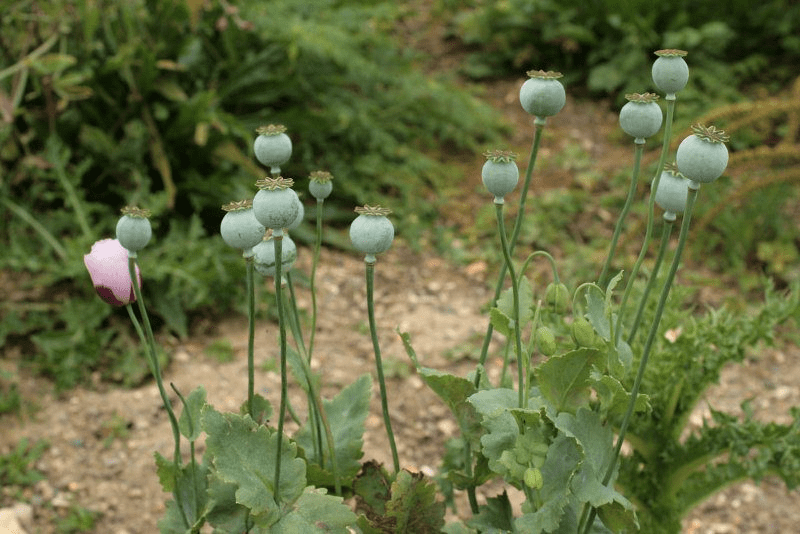
While the above details the company’s long history, its recent activities also deserve a spotlight. In 2006, Macfarlan Smith received official permission from the British government to cultivate opium poppies for medicinal purposes. The company was even granted a field in Didcot for this. Soon enough, the scale of this operation became so impressive that Macfarlan Smith effectively became a leading global producer of these products.
Engineering Solutions for Eco-Friendly Products
In June 2022, the company, still part of Johnson Matthey Health, was sold. The new owner was Altaris Capital Partners. This turn of events eventually led to the organisation being renamed Veranova.
Its scope of activity shifted slightly. It began developing and producing Active Pharmaceutical Ingredients (APIs), supplying these to the biotechnology and pharmaceutical industries.
It’s also important to note that Veranova, through developing new engineering solutions, has increasingly adopted the use of cocrystals in its operations. This allows it to more precisely regulate the eco-properties of its products, particularly their solubility in water and fat.

Thus, Macfarlan Smith’s experience can be seen as proof that pharmaceutical manufacturing isn’t always associated with a colossal risk to the environment. When a company pursues continuous development and adheres to modern standards, implementing eco-friendly approaches is entirely achievable. It simply requires the desire to do so and, of course, the presence of specialists with deep knowledge in their field.