

Science, in many ways, is a creative endeavour. To conduct research, and even more so to make new discoveries, a creative approach is crucial. Without it, achieving truly groundbreaking results that reveal something new about a phenomenon simply isn’t possible. Find out more at edinburghname.
Edinburgh can rightly be considered a pioneering city in scientific development. It has, after all, been the birthplace of countless talented scientists. Furthermore, the city authorities, alongside various organisations, actively foster the growth of science and help it reach new heights. The impressive scientific progress Edinburgh boasts is a result of the combined efforts of officials, relevant bodies, and, of course, the scientists themselves.
Returning to Edinburgh’s role as the hometown for many scientists, it’s worth noting that these individuals, at various points in history, played a significant role in the establishment and advancement of science. Even if many began to realise their potential beyond their homeland, their connection to Edinburgh never wavered. More often than not, once they became renowned scientists, they returned to their native city to contribute to the betterment of its scientific landscape.
Adam White stands out as one of Edinburgh’s most celebrated scientific figures. His talent and professional potential shone brightly in the field of zoology.
Throughout his career, White conducted numerous valuable studies, the results of which were published in individual works. These publications became significant scientific assets, actively utilised by contemporary scientists.
White, therefore, left behind a substantial scientific legacy. This means his entire journey and all his efforts certainly weren’t in vain. For any scientist, recognition is paramount. And even if it often only comes after their passing, the most important thing is that their work was valued. And for science, that individual’s career proved to be both significant and beneficial.
Early Years
Adam was born in Edinburgh on 29 April 1817.
It’s worth noting that his acquaintance with John Edward Gray, who worked in the Zoological Department of the British Museum, played a huge role in the development of his future career. White himself took his first professional steps there at the tender age of eighteen.
A Task of Great Responsibility
1841 marked a significant event in Adam’s career. It was then that he undertook the identification of spiders collected by Charles Darwin during his expedition aboard the HMS Beagle. Each specimen had been preserved in wine spirit, making the work painstaking yet incredibly valuable from a scientific perspective.
The results of this labour were later published, and the work itself was titled “Description of new or little known Arachnida.”
Scientific Interests
Overall, White’s scientific interests predominantly revolved around insects and crustaceans. Lengthy research occupied the majority of the scientist’s time, but it was all for a good cause. Thanks to this dedication, Adam managed to produce such valuable works as “The List of the Specimens of Crustacea in the British Museum” in 1847 and “A Popular History of Mammalia” in 1850.
Organisational Memberships
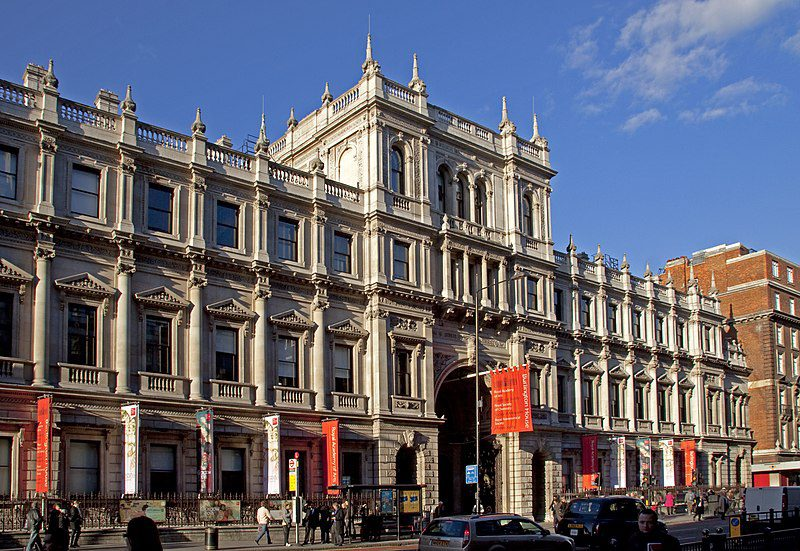
Naturally, like any other prominent scientist, White was a member of relevant organisations that allowed his talent to flourish even further.
In 1849, Adam joined the Entomological Society of London, and in 1846, he became a member of the Linnean Society.
Personal Misfortunes
Sadly, history often shows us that highly talented and successful individuals are frequently unhappy in their personal lives. For some reason, the biographies of many famous personalities are shadowed by tragedies related to home, family, and domestic life. Such cases are far from isolated, and this sombre trend can be observed in the fates of numerous prominent figures.
White was no exception in this regard. After the death of his wife in 1861, he suffered a severe nervous breakdown. This shock, of course, had a lasting negative impact on the scientist’s health.
However, in 1862, Adam remarried, and in this second marriage, he had three children.

The earthly journey of the Edinburgh zoologist concluded on 30 December 1878. Given that the scientist left no will, it’s fair to conclude that this mournful event was sudden. After all, at that time, it was customary to make provisions for one’s property and remaining loved ones well in advance.
Regardless of whether White’s lack of a will after his death was intentional or accidental, his passing meant the scientific community lost a talented and successful scholar.
Fortunately, Adam managed to accomplish a great deal during his career. His most significant legacy lies in the works he bequeathed to us, the results of important research that made a special contribution to the development of global science.