

Edinburgh’s nature is home to countless amazing features, each rightly considered a local landmark. Whether it’s a river, a loch, a hill, or a park, everything in the Scottish capital has its own unique charm that attracts tourists. But locals treasure these spots too, as they offer a chance to relax, escape the daily hustle and bustle, and fall in love with their home city all over again. Read more at edinburghname.
Unknown Nature
However, it’s important to note that many of Edinburgh’s natural landmarks have their own incredible history. Often, this history is not fully explored, or in some cases, it’s completely unknown. Many facts have remained a secret even to the local population, let alone tourists.
This adds another fascinating layer to the Scottish capital, showcasing its multifaceted character through its surprising historical tales.
The River No One Knows Is There
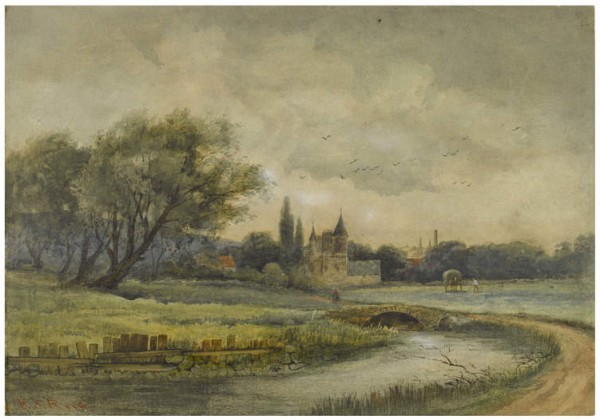
When talking about Edinburgh’s unique natural sites, one of the most important is its so-called hidden river. Interestingly, locals literally walk right over it every day without even a hint of suspicion.
According to historians, this forgotten river once flowed into the man-made Nor’ Loch. As the city began to expand, this body of water became heavily polluted with sewage. With no formal drainage system, waste was simply thrown from windows onto the streets. The natural slope of the land then carried it all down into the Nor’ Loch, and by the 18th century, the loch had turned into little more than a vast, open sewer.
But returning to our hidden natural feature, locals remain unaware of the burn that fed this foul-smelling loch. It continues to flow right under their feet—you just need to know where to look.
The Ancient Loch
The Nor’ Loch was originally created as a defensive feature to protect the north side of Edinburgh Castle. However, it gradually became a dumping ground, not just for human waste but also for rubbish from local slaughterhouses.
Furthermore, the banks of the loch were used as a site for witch trials, and corpses could often be seen in its murky waters.
The Current That Created the Loch
Historians believe the loch was created by damming and altering the course of the Tummel Burn (also known as the East Foul Burn). Maps from the 18th century clearly show a river flowing eastward from the Old Town.
An Unassuming Clue
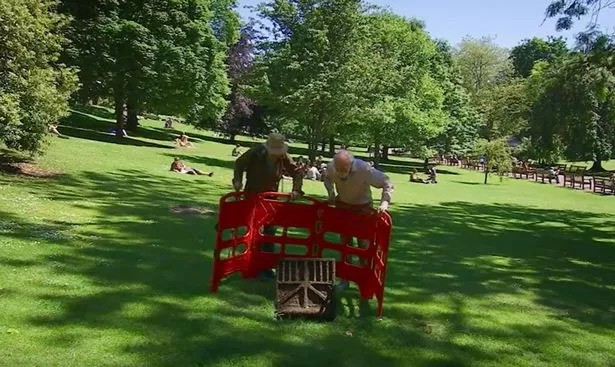
Interestingly, there are no visible signs of the Tummel Burn on the surface of central Edinburgh today. However, in West Princes Street Gardens, an inconspicuous drain outlet can be seen, which carries the water from this hidden river.
Rediscovered on the BBC
The Tummel Burn was even featured in a 2019 episode of the BBC series ‘Grand Tours of Scotland’s Lochs’. In the programme, presenter Paul Murton and historian Graeme Cruickshank explored Princes Street Gardens to find the forgotten water source.
An On-Screen Exclusive
Viewers witnessed a unique event as Paul lifted a manhole cover in West Princes Street Gardens to reveal the lost river. This was the very same river that once flowed into the Nor’ Loch before it was drained.
According to Cruickshank, the Nor’ Loch would never have existed without the Tummel Burn. The river was there before the loch was created and later became its main source of water.
In the programme, both the presenter and historian noted the unpleasant smell at the site. But, as Graeme pointed out, it was “nothing compared to the stench” that would have existed on that spot 300 years ago.
The Tummel Burn is a perfect example of Edinburgh’s layered past. Its story shows how the city’s natural features and human history are deeply interconnected. The river was essential to the Nor’ Loch, which in turn played a key role in the story of Edinburgh Castle.
It proves that everything is connected, and sometimes the most fascinating parts of a city’s history are flowing just beneath the surface, waiting to be rediscovered.