

The fauna of Scotland’s capital is incredibly diverse. It’s fair to say it’s a true haven for anyone dedicated to studying mammals, birds, reptiles, amphibians, fish, insects, molluscs, worms, and other invertebrates. Discover more at edinburghname.
Yet, amongst all this richness, arachnids deserve special mention. These creatures often strike genuine fear into many hearts. However, there are also those (beyond specialists) who hold them in great esteem – and quite rightly so, because the role of spiders in our ecosystem is incredibly important.
Spider Diversity
Edinburgh is home to a wide array of spider species, including the Giant House Spider and the Zebra Jumping Spider. Occasionally, there are even more unusual sightings, such as African spiders.
All of this simply underscores the incredible diversity of arachnids that form an integral part of the Scottish capital’s fauna.
Big and Bug-Eyed
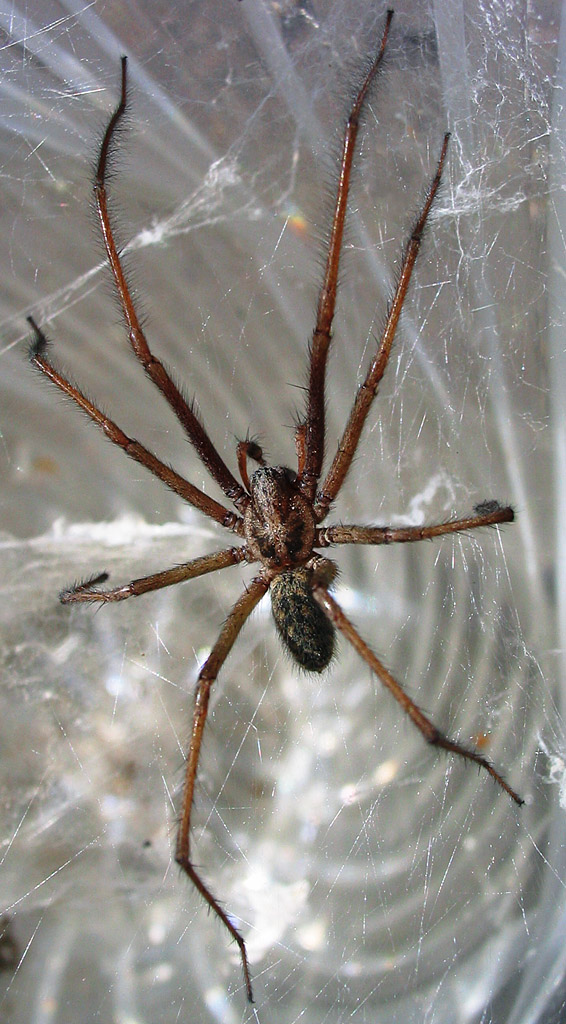
The Giant House Spider is one of the most recognisable arachnids in Edinburgh.
What makes it unique is that both sexes share the same colouring.
Their colour is predominantly dark brown, with a lighter section on the sternum (underside of the cephalothorax) featuring three arrow-like spots on each side.
Both their abdomen and legs are noticeably hairy. This species also boasts eight eyes arranged in two rows. However, as is often the case, quantity doesn’t always equate to quality; the Giant House Spider can only visually distinguish between light and dark.
A Striking Beauty
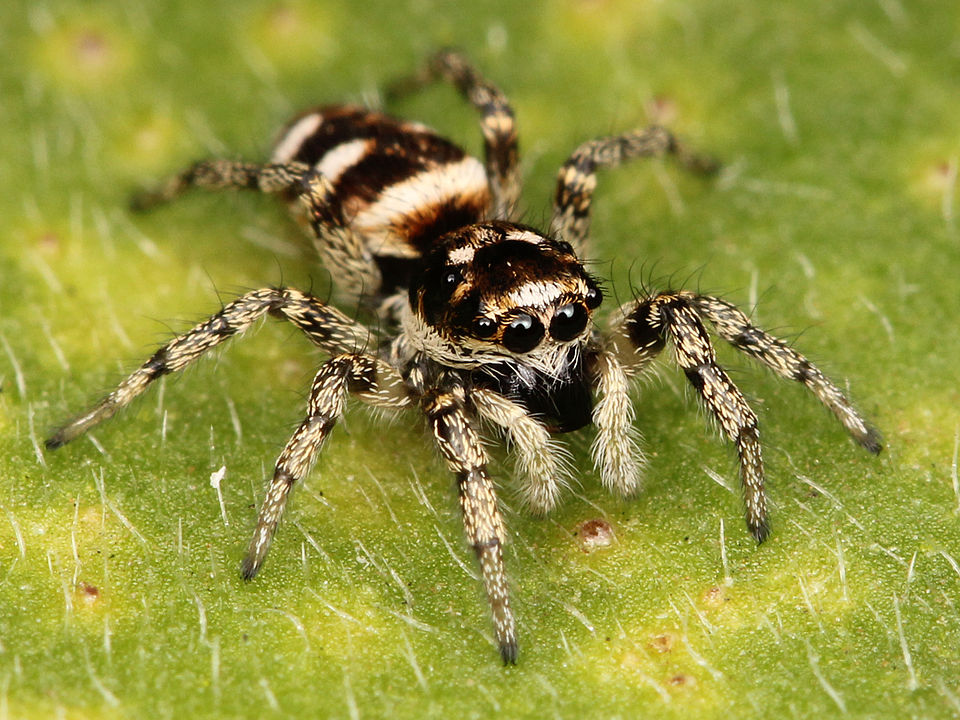
The Zebra Jumping Spider is another eye-catching arachnid you can find in Edinburgh and its surrounding areas.
These are small creatures with eight eyes and a stunning black and white striped pattern formed by their hairs.
This species is directly associated with open spaces where it lives, including rocks, tree trunks, and pebble beaches. However, building walls and garden fences also frequently conceal these tiny creatures.
Because the Zebra Jumping Spider isn’t shy around humans, you might even spot them right inside your home, perhaps in the corner of a windowsill.
The Spider That… Moults
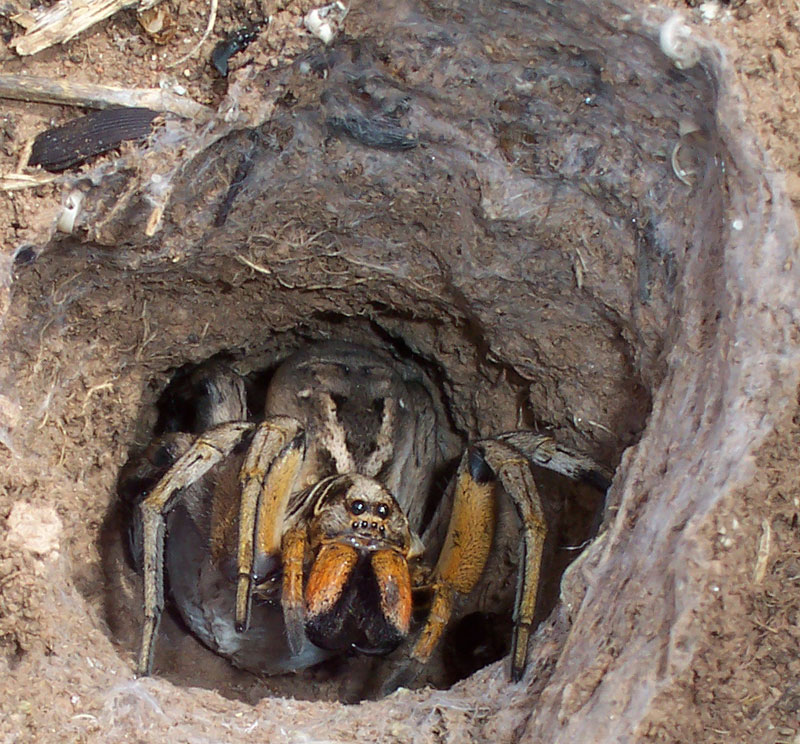
Wolf Spiders are also residents of Edinburgh’s ecosystem. They possess a primitive body structure, consisting of a cephalothorax (responsible for breathing, vision, movement, and food intake) and an abdomen (containing internal organs).
Interestingly, this species of spider undergoes a process of moulting as it grows.
Regarding their colouring, it’s typically dark, ranging from black to grey, with lighter shades being rare. Females differ from males in specific details: they are larger, lighter, and have less developed front limbs.
It’s important to note that this spider species acts as a natural stabiliser of insect populations, a fact that highlights their immense importance to the ecosystem.
An Unusual Creature
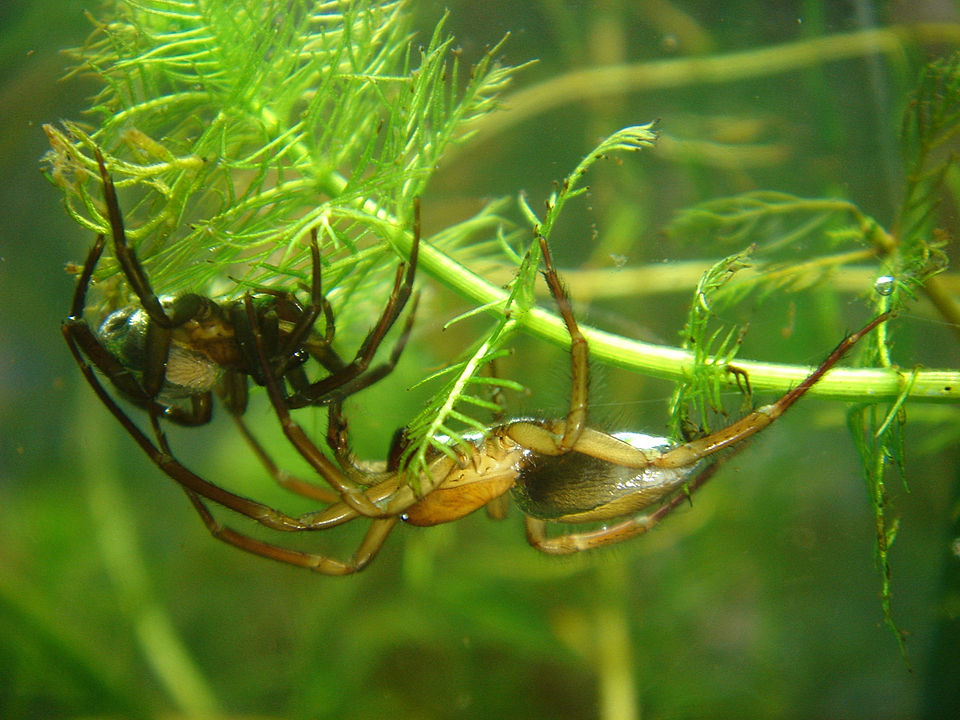
The Water Spider is a unique creature also found in Edinburgh’s fauna.
Males of this species are usually larger than females. Their brown abdomen is covered in velvety hairs coated with a greasy substance. This not only helps the spider stay dry but also traps air between the hairs, making its abdomen appear silver underwater.
This water-repellent substance is, in fact, a modified gland secretion.
Overall, this species of spider remains submerged for long periods, only occasionally surfacing to replenish its air supply.
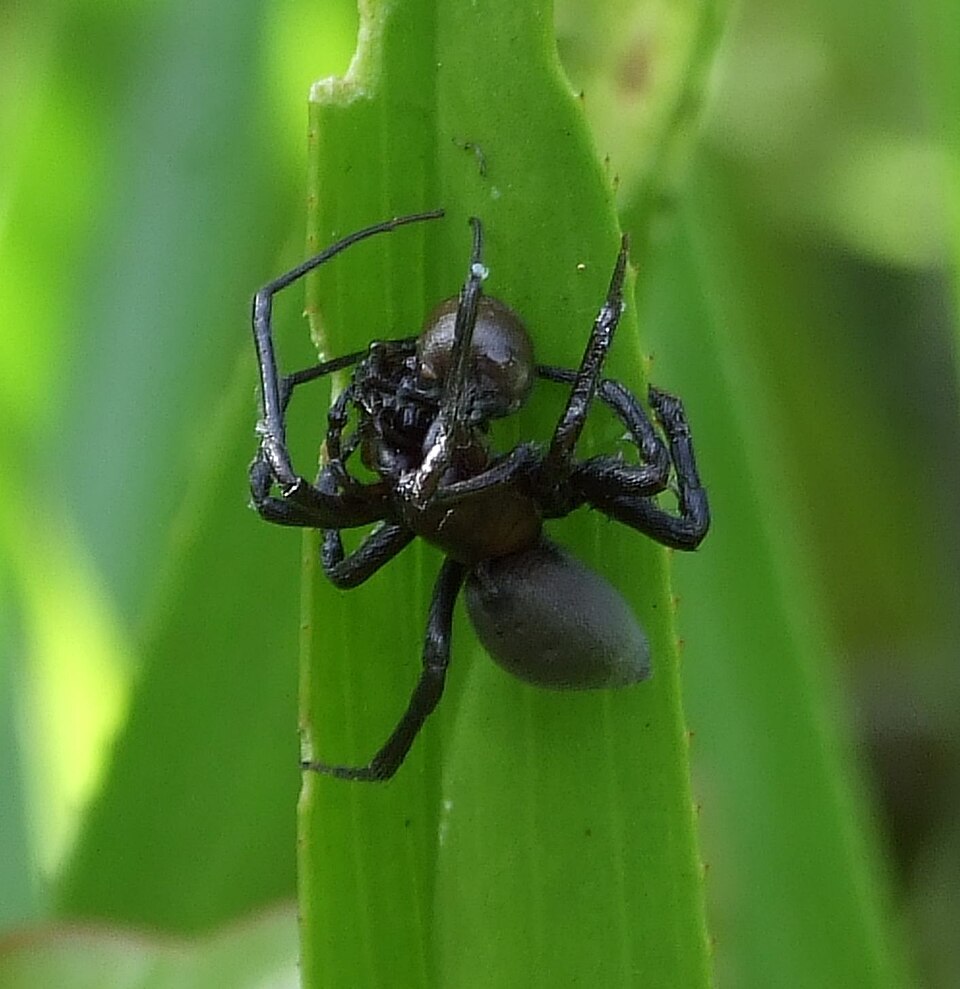
Thus, arachnids are a vital and integral part of Edinburgh’s ecosystem, playing a key role in stabilising insect populations.
Despite the very real fear many people feel at the sight of even the tiniest spider, their significance simply cannot be underestimated.
Therefore, it’s crucial to treat them with great respect. Especially since, more often than not, these creatures are not actively seeking human interaction. But if you do encounter one, it’s really not worth killing them.
Because a spider that might seem insignificant or repulsive at first glance could actually be a rare specimen, meaning its very existence is already under threat.
In modern reality, the lives of many spiders are in immense danger. There are hardly any places left untouched by human footsteps, and these tiny creatures are literally fighting for their survival.
Perhaps people should take a moment to reflect on such simple, yet complex matters. In the endless pursuit of profit, expansion, development, land reclamation, grand construction, and other ambitious civilisational plans, we should remember the most important thing: that in nature, all are equal. Therefore, simply because of our size and capacity for thought, humans shouldn’t have privileges over those who are weaker. This, as you might guess, refers to representatives of the fauna. Mammals, birds, fish, and even insects deserve simply to live. A true Homo sapiens should never forget that.