

It’s hard to dispute that Edinburgh ranks among the world’s most renowned cities. Its fascinating history draws countless tourists, who are endlessly captivated by this wonderful place. Discover more at edinburghname.
Naturally, like any other city, Edinburgh went through numerous stages during its development, which eventually gave it its distinctive character and features.
One of the most intriguing aspects of Edinburgh’s growth was its industry. This sector provided employment and security for many city residents and those in the surrounding areas. And, of course, it played a massive role in the local economy.
If you were to list all the factories and enterprises that have existed in Edinburgh at one time or another, you could easily compile quite a hefty directory.
But this article focuses on a particular site that stood out as one of Edinburgh’s most crucial factories. Although it ceased operations long ago, its memory and legacy are carefully preserved by the city’s inhabitants.
How It All Began
So, let’s talk about Bonnington Chemical Works. It was founded way back in 1822. Its primary purpose was to process coal tar and ammonia hydrate residues. In this sense, the factory was utterly unique and groundbreaking because, before it, there was no equivalent facility that effectively transformed “waste” into valuable products.
It’s worth highlighting that the secret to Bonnington Chemical Works’ success lay in its ability to combine the technical, scientific, and commercial skills of its diverse workforce. It’s also fair to say that the factory evolved alongside the coal tar industry, and its operations were undoubtedly influenced by the prevailing industrial, social, and political views of the time.
The Backstory
The emergence of Bonnington Chemical Works is intrinsically linked to the introduction of gas lighting in Edinburgh, which happened in 1818.
Here’s why.
To facilitate a more modern lighting method, coal gas was produced. This process resulted in significant residues of coal tar and ammoniacal liquor. These by-products later became the main raw materials for the aforementioned factory.
Production
As mentioned, Bonnington Chemical Works was officially founded and began operations in 1822. Its initial work involved distilling coal tar to separate naphtha.
By 1830, the company was producing tar oil, naphtha, and carbon black.
Furthermore, the factory actively processed ammonia solution into sal ammoniac.
John Wilson Anderson, who would become a pivotal figure in Bonnington Chemical Works’ establishment, also spearheaded the production of hydrochloric and sulphuric acids, as well as soda ash. According to Anderson, the factory was a trailblazer in Great Britain, being the first to produce the latter product using the Leblanc method.
A New Level
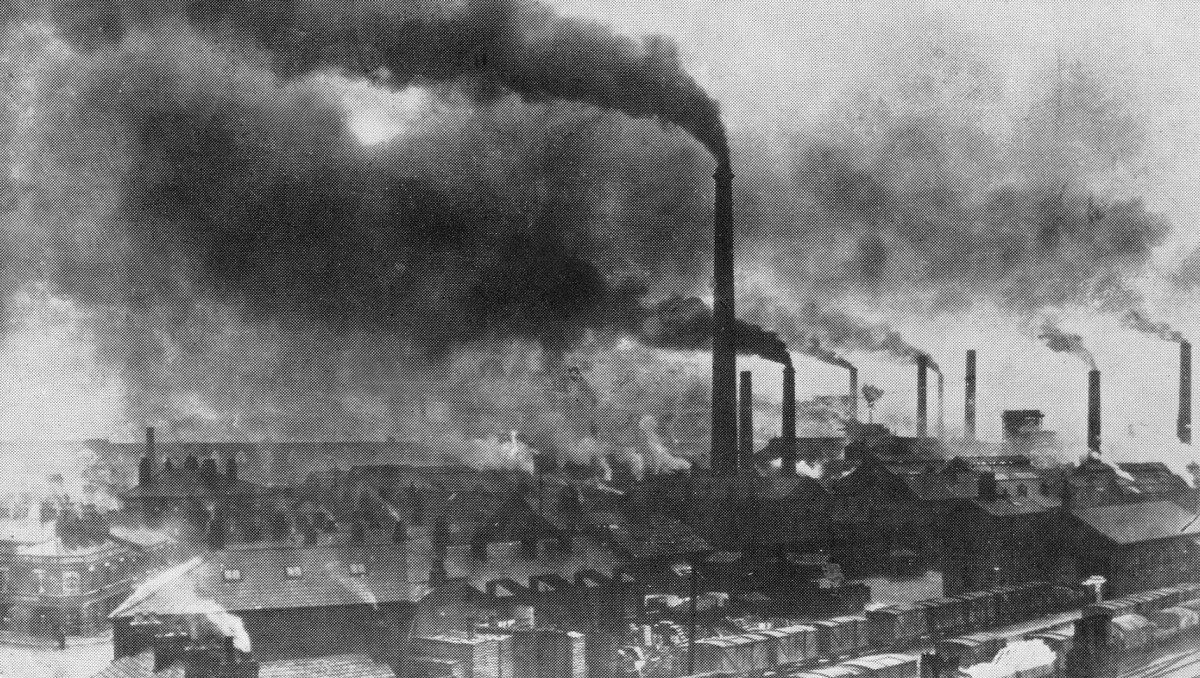
After 1835, the factory reached a new level of productivity. Its new products then included asphalt road surfacing and ammonium sulphate-based fertilisers. These innovations came about thanks to the next head of the company, Thomas Astley, who, incidentally, was the son-in-law of the now-deceased Anderson.
Later, in 1847, Bonnington Chemical Works experienced another significant phase. Alongside a change in management, the company began manufacturing new products, including sodium sulphite, sodium thiosulphate, and a special copper sulphide-based paint.
Constant Development
Interestingly, the factory didn’t stand still; it continued to improve. Much of this, of course, was due to the dedicated people who worked there.
In 1856, with the arrival of a new manager, Edmund Ronalds, the company began producing coke, benzene, and coke oil. All previous products continued to be successfully manufactured.
What’s more, the new manager paid attention to the factory’s environmental impact. This was demonstrated by the installation of a large chimney, which aimed to reduce emissions.
Edmund also oversaw the commissioning of a new acid plant, where the production of sulphurous acid gas, as well as sulphuric and hydrochloric acids, began.
End of an Era
From everything described, it’s easy to see that Bonnington Chemical Works was a truly immense operation. It was undoubtedly a real leader in the manufacturing sector.
However, sadly, even the most powerful enterprises have a limited lifespan. Bonnington Chemical Works was no exception, ceasing operations in 1878.
A Reminder from the Past
But, as we know, the legacy of anything monumental cannot be forgotten or erased forever.
The aforementioned factory served as further proof of this. Many years later, excavations on Bonnington Road Lane unearthed the “remains” of Bonnington Chemical Works.
According to Edinburgh’s topographical maps, the factory’s layout had significantly changed by 1877. Several new, smaller buildings appeared at the site then.
Also, on the 1877 maps, a tar tank could be seen. This isn’t surprising, as coal tar was the factory’s main raw material.
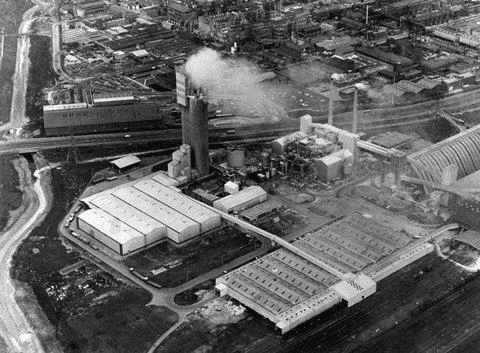
Thus, Bonnington Chemical Works can confidently be considered one of the most influential enterprises of its time. All the products manufactured there were in huge demand, and the factory’s continuous development proves that its operations were managed and regulated by true professionals in their field.