

Edinburgh can rightly be considered a city that has given the world a great many talented people. They have become worthy representatives of various fields of activity, and through their discoveries and developments, these successful natives of Edinburgh have earned their place in history. Find out more at edinburghname.
For example, the global scientific community remembers and knows Allen Kerr as an Australian biologist of Scottish origin. His professional interests were centred on plant pathology, so it is no surprise that his work in this field brought him true fame. Allen was able to investigate crown gall disease, which is essentially a plant cancer caused by the bacterium Agrobacterium tumefaciens. Although Kerr’s professional journey is more closely associated with Australia, his Edinburgh roots cannot be overlooked.
Early Years and Education
The future scientist was born on 21 May 1926 in the city of Edinburgh. Kerr’s scientific path began at the University of Edinburgh, from which he successfully graduated with a bachelor’s degree. Upon finishing his higher education, Allen decided to devote himself entirely to science.
In 1947, he began his career as an assistant mycologist at the North of Scotland College of Agriculture (now the Scottish Agricultural College). This job became the very start that allowed him to delve deeper into the sub-disciplines of biology and, of course, to more clearly define the direction of his future career.
A Move to Australia and Academic Ascent
After working as an assistant mycologist for four years, Kerr decided to try his hand in a new sphere. Thus, in 1951, his professional journey began within the walls of the University of Adelaide. Initially, he held the position of lecturer there, but Allen’s university career gradually progressed, allowing him to eventually secure the position of senior lecturer, and then Reader in Plant Pathology.
Prestigious Fellowships
It must be said that Kerr’s successful scientific activities and the numerous results of his research led to him becoming highly respected among scientists. From 1978, he began to be actively invited to become a member of various scientific organisations.
Notably, he served as Vice-President of the International Society for Plant Pathology from 1978 to 1983. Furthermore, from 1980 to 1983, the scientist successfully headed the Australasian Plant Pathology Society. This is not to mention that Kerr was elected a Fellow of such eminent and authoritative organisations as the Australian Academy of Science and The Royal Society in London.
Official Recognition and Leadership
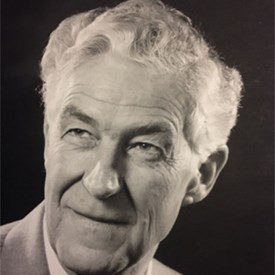
In the world of science, awards and prizes are a key indicator of a scientist’s success, as they are typically granted based on the decisions of peers and respected scientific bodies. In 1990, Kerr was fortunate enough to become a recipient of the prestigious Australia Prize. The basis for this was his valuable work in the field of plant genetics and biology.
In addition to receiving the prize, 1990 was a landmark year for Allen in his university activities. In that same year, he became Head of the Department of Plant Pathology at the University of Adelaide. The very next year, in 1991, he had the honour of heading the Department of Crop Protection.
A Long and Fruitful Life
Sadly, when studying the biographies of famous scientists, one might conclude that not all of them live long lives. There seems to be a strange paradox where some truly brilliant people have their time cut short. In this regard, Allen Kerr was a happy exception. Fate granted him the opportunity to live to the age of 97. Moreover, his entire life was rich, interesting, and filled with diverse research that subsequently became an invaluable asset to science.
Thus, Allen Kerr is one of the most brilliant scientists whose entire scientific activity was closely linked to the study of plant pathologies. His research allowed his successors to become more closely acquainted with many of the harmful bacteria that lead to diseases in various crops.
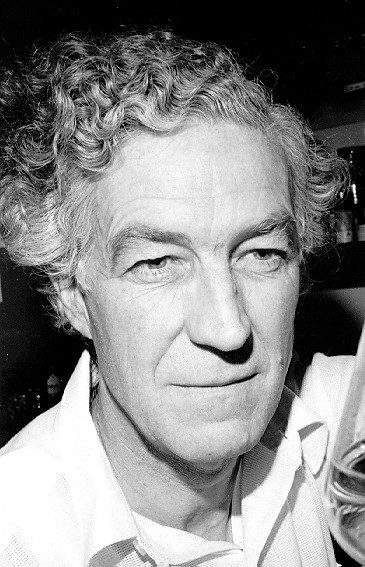
Furthermore, it is important to note the following. Despite the scientific community knowing Allen primarily as an Australian biologist, when speaking of his biography, one cannot fail to mention the Edinburgh origins of this unique scientist. For who knows how his fate might have turned out if he had been born somewhere else entirely? Edinburgh is a city that seems to foster the emergence of truly talented people, and as practice shows (along with the biographies of numerous famous personalities), it is pointless to dispute this fact.