

Edinburgh is world-renowned for its unique beauty and stunning landscapes. But fewer people are aware of the city’s fascinating topography, which owes its existence to a diverse range of underlying rocks. The city’s modern landscape was sculpted by geological erosion, a process especially pronounced during the Pleistocene epoch. Often referred to as the Ice Age, this period began roughly 2.6 million years ago. Find out more at edinburghname.
Edinburgh’s Foundational Rocks
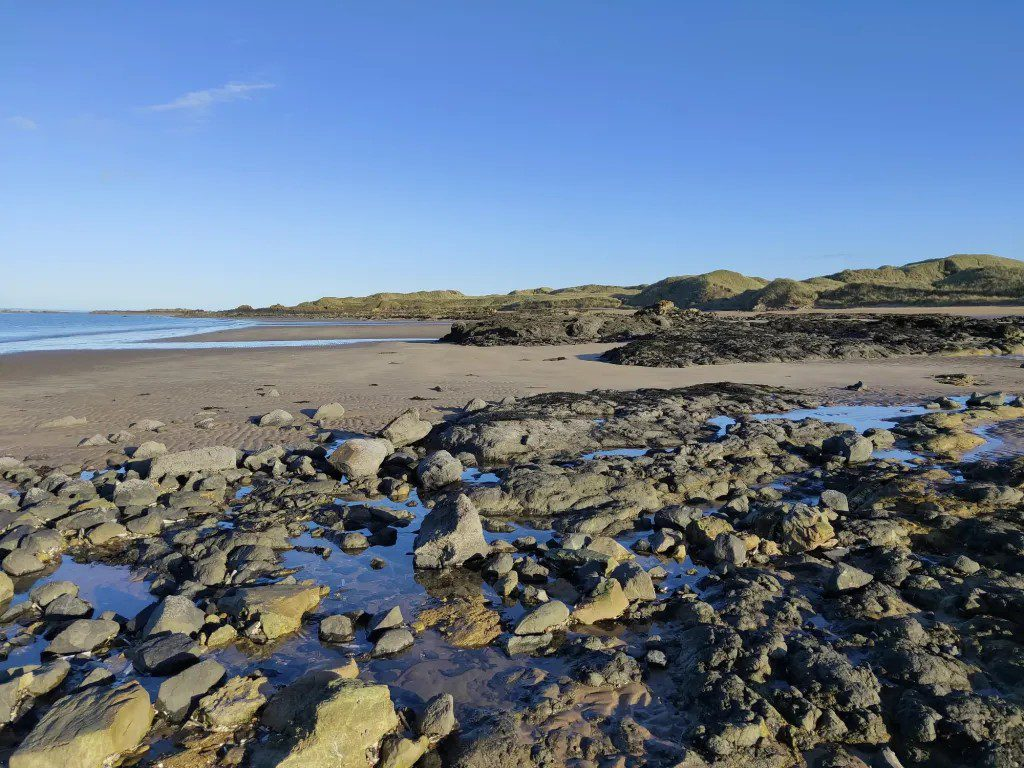
For over 10,000 years, humans have harnessed Edinburgh’s unique geology and landscape. The terrain has been strategically used for settlements, agriculture, defence, and, naturally, for construction. The Edinburgh area is characterised by two main types of rock: sedimentary and igneous. Sedimentary rocks were formed from the slow build-up of deposits in shallow seas and river systems. Igneous rocks, on the other hand, were created when volcanic lava cooled on the Earth’s surface or when magma solidified within the crust.
A Tale of Hard and Soft Rock
A key distinction between sedimentary and igneous rocks is their hardness. Igneous rock is generally harder and erodes far more slowly. It’s for this reason that these rocks form the area’s hills, most notably The Pentland Hills and the Seven Hills of Edinburgh. In contrast, sedimentary rock is much softer and wears away more easily, resulting in a gently rolling landscape.
A Tropical Past: Edinburgh’s Sedimentary Story
Around 350 million years ago, the land that is now Edinburgh was part of a large continent with a warm, humid climate. Erosion wore down mountains to the north, washing sediment into vast river systems that flowed southwards. Over time, the environment transformed cyclically, primarily due to fluctuating sea levels. Geologists point to locations like Barn’s Ness in East Lothian and the Water of Leith in Stockbridge as clear examples of these changes.
River deltas and lush swamps also played a significant role. River channels collected sand, which over time compacted into the layers of sandstone that would become a key building material for Edinburgh. In other areas, dense swamp vegetation accumulated and eventually formed coal. At times, the sea level rose dramatically, flooding the central lowlands with warm waters. These seas teemed with life, including corals, brachiopods, and crinoids (sea lilies), whose remains formed the layers of limestone found in places like East Lothian.
Echoes of a Lost Ocean
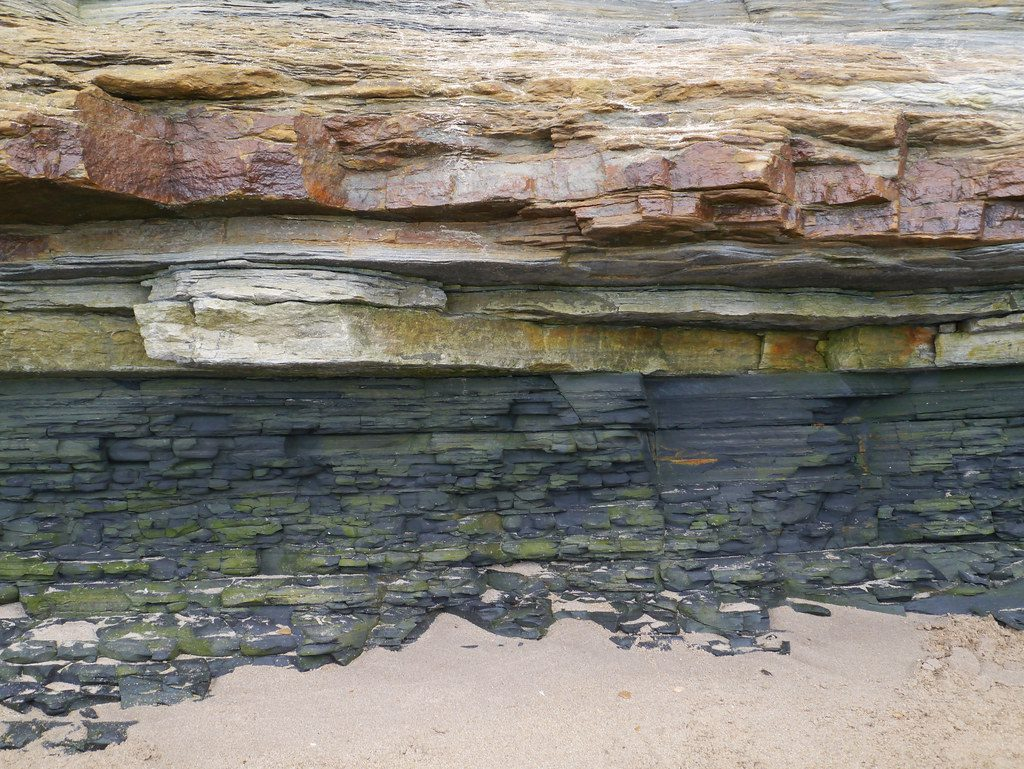
Even older sedimentary rocks can be found in the Edinburgh area, remnants of the deep Iapetus Ocean that once lay south of Scotland. This ocean vanished around 420 million years ago when tectonic plate movements brought continents together. The collision folded and buckled the ancient seabed, transforming its deposits into the contorted layers of mudstone and sandstone now visible at locations like Siccar Point and The Pentland Hills.
Edinburgh’s Volcanic Heart
The igneous rocks in the Edinburgh region are the product of intense volcanic activity. The durable igneous rock that forms The Pentland Hills, south of the city, is over 400 million years old. The magma that erupted to the surface had a varied chemical makeup, leading to the formation of several different rock types, including rhyolite, basalt, trachyte, and andesite.
The Legacy of Smaller Volcanoes
After a 70-million-year lull, volcanic activity returned to the Edinburgh area. This time, it involved smaller, short-lived volcanoes, mostly basaltic in nature. As these eruptions occurred on a wet landscape, the interaction between hot magma and water caused violent explosions, scattering bombs of lava and volcanic ash across the area. The hilly landscape of central Edinburgh is formed from the remnants of these very volcanoes. Notable examples include Calton Hill, Arthur’s Seat, and Craiglockhart Hill.
Magma Beneath the Surface
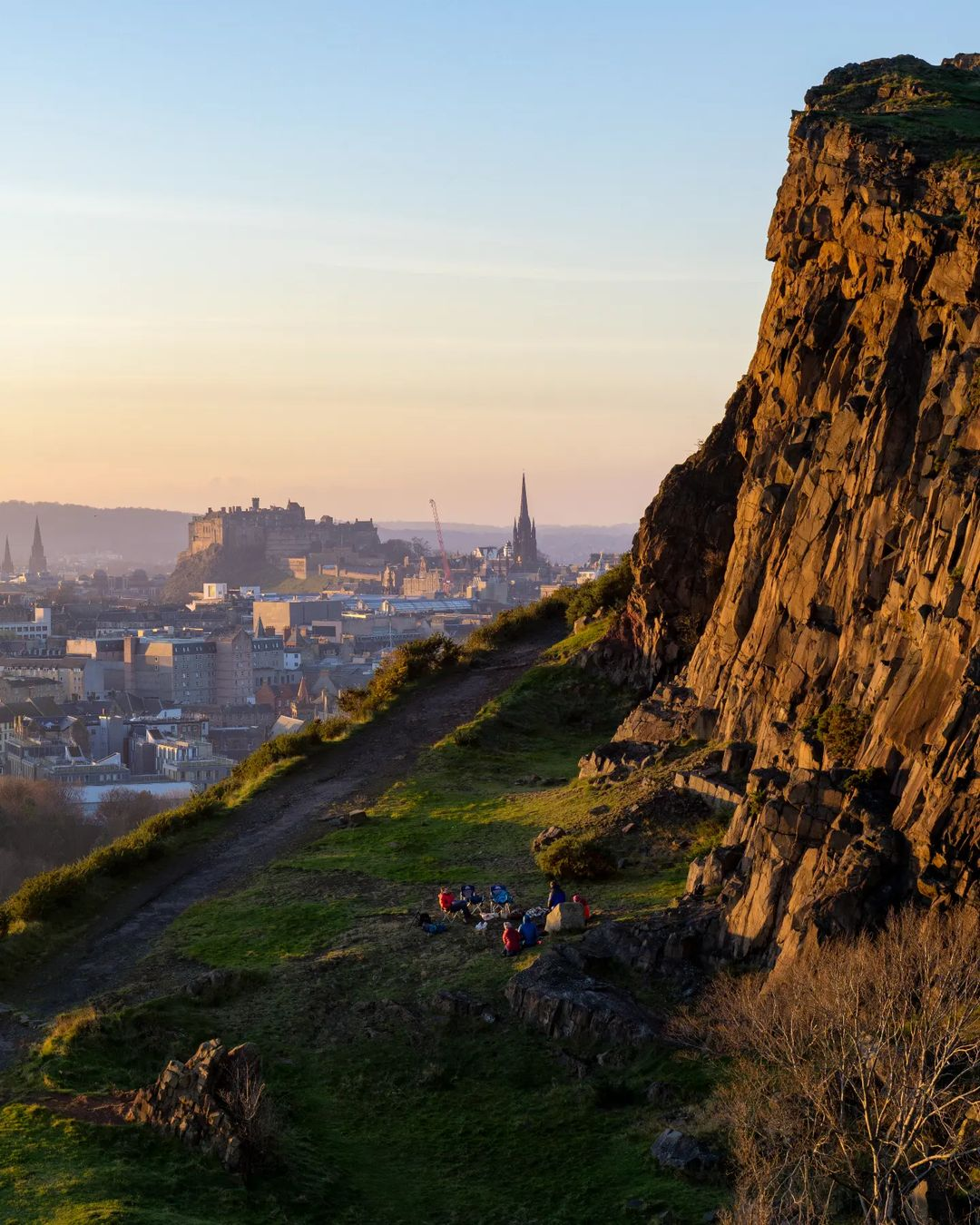
Not all magma reached the surface. Some was trapped underground, where it squeezed between existing layers of sedimentary rock. This created flat, horizontal sheets of a hard, crystalline rock called dolerite, known as sills. Dolerite was famously quarried at Salisbury Crags. Thanks to its exceptional durability, it was widely used to make setts for paving Edinburgh’s historic streets.
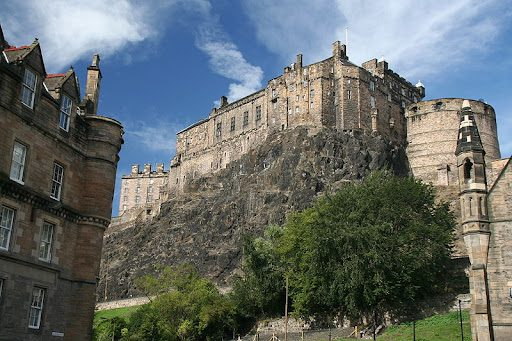
Edinburgh’s geological heritage is truly one of its greatest assets. These ancient rocks not only provided the foundations and materials for the city’s growth but also offer a fascinating window into the deep past of Scotland’s picturesque capital.