

Scotland can rightly be called a homeland of unique, innovative solutions. Throughout its history, its leading figures have actively worked to create something new. Interestingly, their work has often included an environmental component; in other words, much of what they created was, in one way or another, connected to the environment and its protection. Find out more at edinburghname.
John Scott Russell, in particular, went down in history as a talented engineer and shipbuilder. Yet his career also touched upon environmental themes, as he was one of the first to work on steam-powered mechanisms. These designs would later gain considerable popularity as some of the most versatile engines for moving vehicles and their passengers.
While Russell’s scientific career was not limited to this one area, this article will focus on it, as it represented an innovative solution that essentially introduced an eco-friendly approach to transport for its time.
Early Success in Edinburgh
Russell was born on 9 May 1808 in Glasgow, where he also received his university education. At the age of just 17, he made the serious and independent decision to move to Edinburgh. In his new home, John quickly settled in and began a teaching career. As a staff member at the Leith Mechanics’ Institute, he taught students natural sciences and mathematics. His lectures were immensely popular, and his classes always had a very high attendance rate.
A Prestigious Post and Official Recognition
Shortly after his move to Edinburgh, John’s reputation as a gifted and capable young man began to spread. Even experienced masters of the scientific community did not hesitate to express their respect and admiration for him. It was no surprise, then, when Russell received an offer that instantly cemented his status.

In 1832, following the death of Sir John Leslie, the Professor of Natural Philosophy at the University of Edinburgh, it was Russell who was invited to take his place temporarily. He was just 24 years old. The main criteria for his appointment were his extensive knowledge of the natural sciences and, of course, his huge popularity as a lecturer.
Furthermore, the young scientist gained allies who actively supported him and tried to persuade him to run for the permanent position, as his role was only temporary until a new professor was elected. However, John declined this venture, primarily out of immense respect for another candidate who was seeking the post. Instead of entering an election race, Russell chose to focus on his experiments, research, and practical scientific work.
Pioneering the Steam Carriage
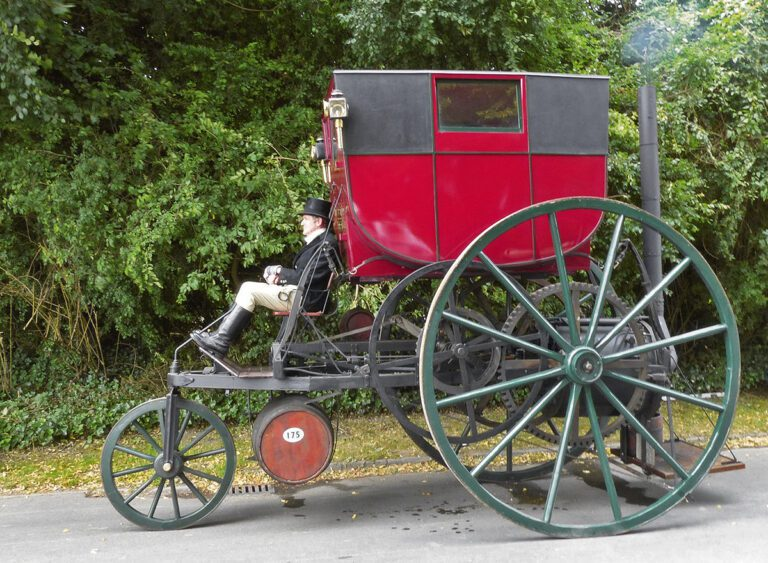
This dedication soon led to one of the most significant achievements of his career, which he worked on in Edinburgh. Russell was developing a steam engine and even devised a special method for staying the surface of the boiler, a technique that would later become a universal standard adopted by many other engineers.
In practice, Russell’s experiments laid the groundwork for a new type of transport—one that was remarkably ecological for its time. Back then, travel relied heavily on horse-drawn carriages, which placed an immense strain on the animals. But soon, everything changed with the establishment of the Scottish Steam Carriage Company. This company produced a steam-powered carriages, each equipped with two cylinders delivering 12 horsepower each.
In 1834 alone, six of these vehicles were built, all designed and equipped to the highest standards. In the same year, they began carrying their first passengers. The frequency of this new transport on the roads was truly exceptional, with a steam carriage passing by almost every hour. Of course, the road trustees were not entirely pleased with this development, citing the disruption caused to the traditional horse-drawn carriages.
A Modern Perspective on Steam Power
The great inventions of that era remain highly valued today and continue to influence modern design. Russell’s steam engine is no exception. Looking at this mechanism from a contemporary viewpoint, it’s clear why it can be considered eco-friendly.
In a steam engine, the fuel combustion process takes place in a special external chamber. Under normal pressure, this allows for complete oxidation without creating toxic by-products. This is the main difference between these external combustion engines and internal combustion engines, which require special catalytic converters to meet modern environmental standards. Because steam engines can be powered by sources like geothermal energy, they demonstrate significant ecological potential.
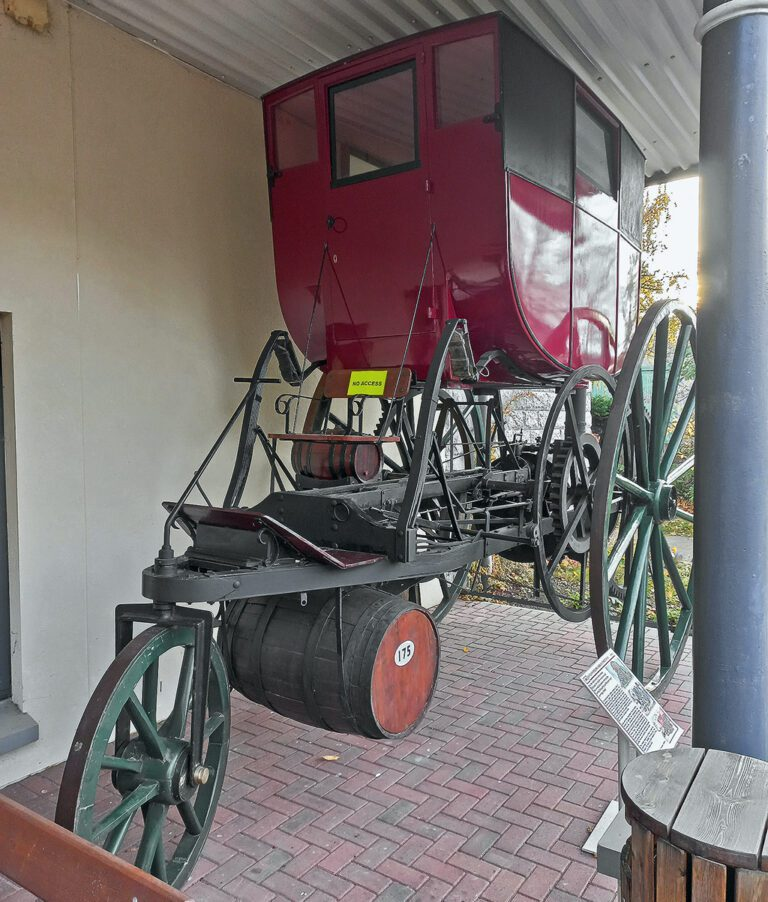
Thus, John Scott Russell’s innovative solution was not just an engineering sensation; it can also be confidently described as one of the first eco-friendly mechanisms. His steam engine operated with minimal harm to the environment and effectively became a forerunner to subsequent generations of similar, cleaner transport designs.